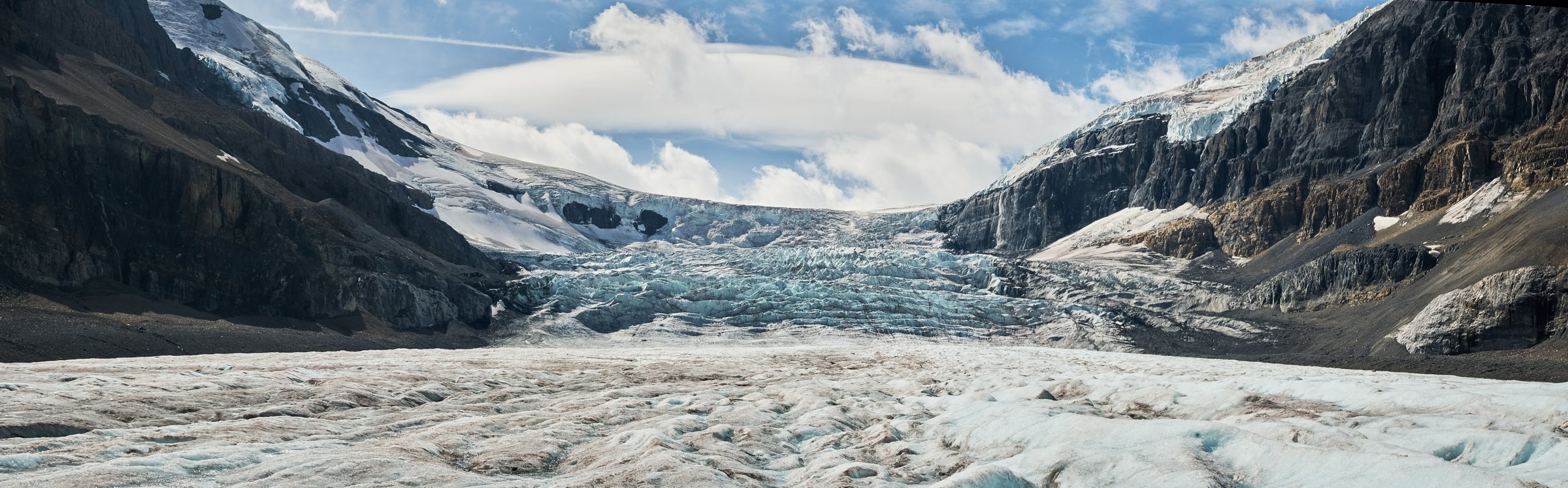
ATHABASCA GLACIER · JASPER NATIONAL PARK · ALBERTA
The first drone permit to film Athabasca Glacier — a collaboration with conservation artist Jan Kabatoff and curator Jessica Turner.
June & August 2024 · Dave Copithorne · Calgary, AB
Jan Kabatoff has been photographing glaciers since 2005. She has travelled from the Canadian Rockies to the Andes to Mongolia's Altai Mountains, drawn back repeatedly by the same conviction: that glaciers are not just scenery, but sentient beings, storehouses of ancient water, natural thermostats for the northern hemisphere, and symbols of everything we stand to lose. When she reached out to collaborate on a film project focused on Athabasca Glacier, I understood immediately that this wasn't a typical shoot. This was about bearing witness.
The question was: how do you film something that is disappearing, in a way that actually makes people feel what that means?
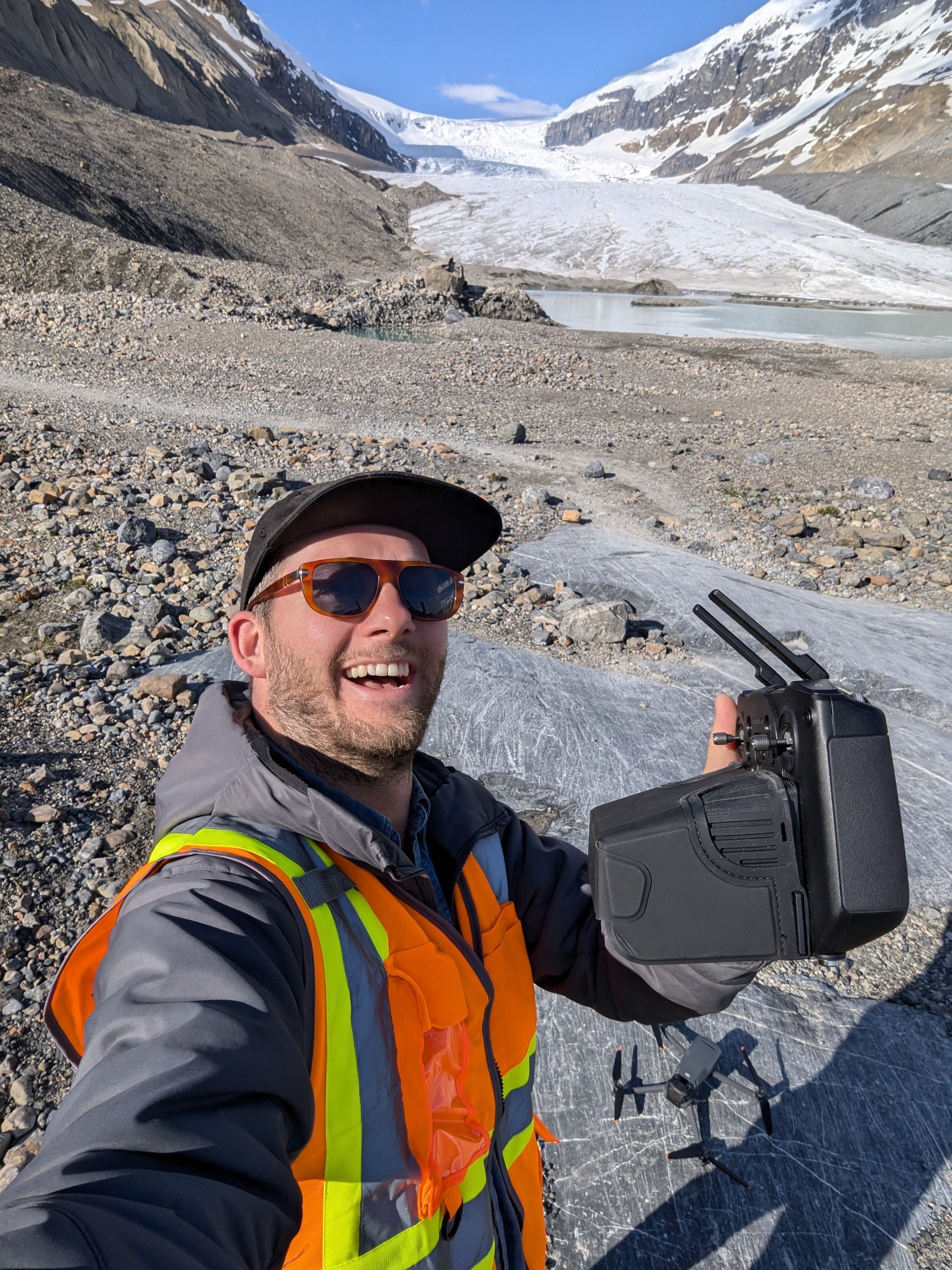
Drone use inside Jasper National Park is almost universally prohibited. Parks Canada restricts aerial filming to protect wildlife, the visitor experience, and the ecological integrity of one of Canada's most significant protected landscapes. Getting authorization to fly over the glacier required a formal application process, and more than that a compelling case that the project had genuine cultural and environmental value.
Jan's track record as a conservation artist, her upcoming exhibition, and the documentary intent of the project made that case. In June 2024, we received what we believe is the first-ever drone filming permit granted for Athabasca Glacier. It was a significant moment, not just for the project, but because it was a recognition by Parks Canada that art and film can serve the same ends as science when it comes to communicating the reality of climate change.
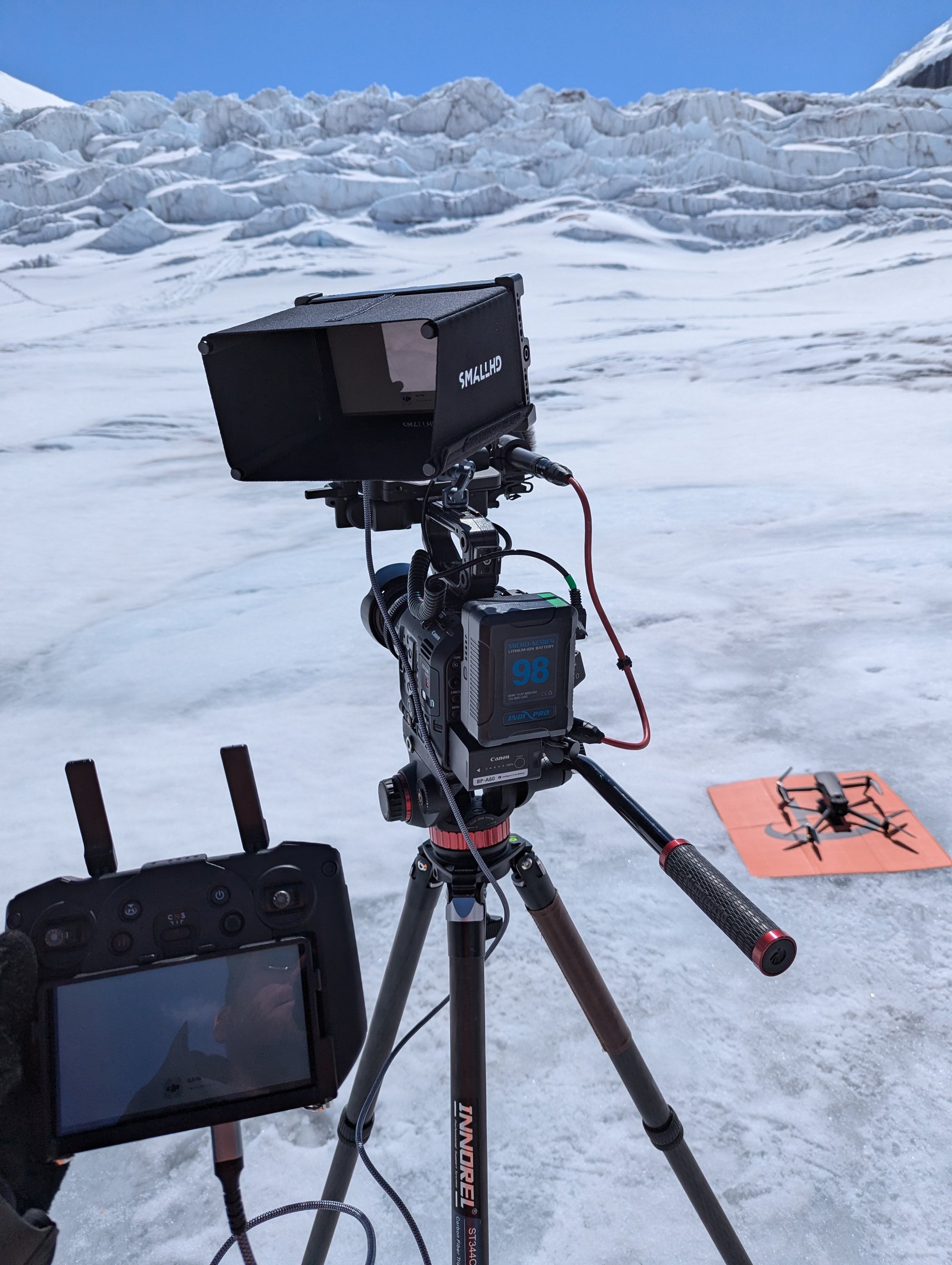
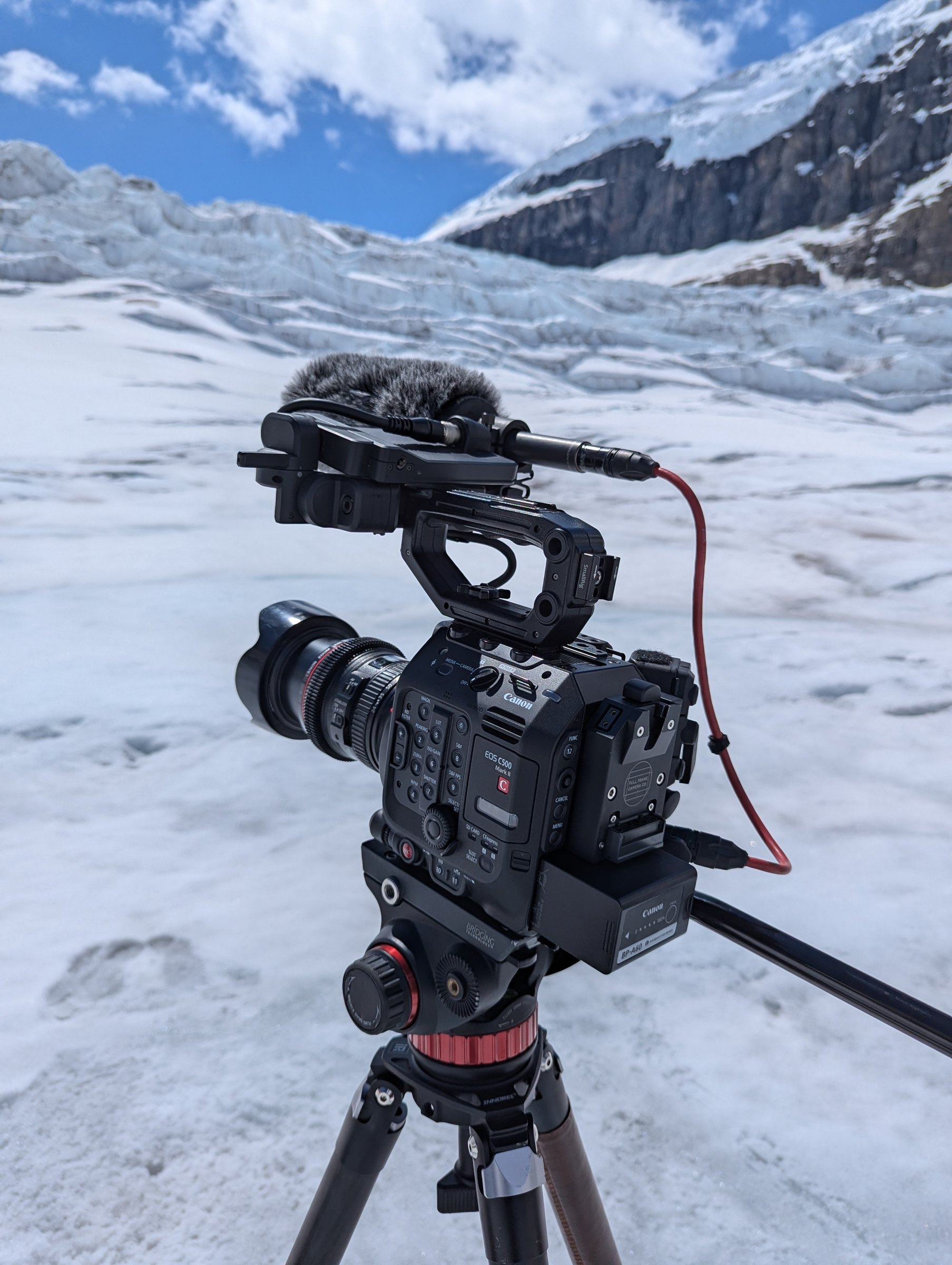
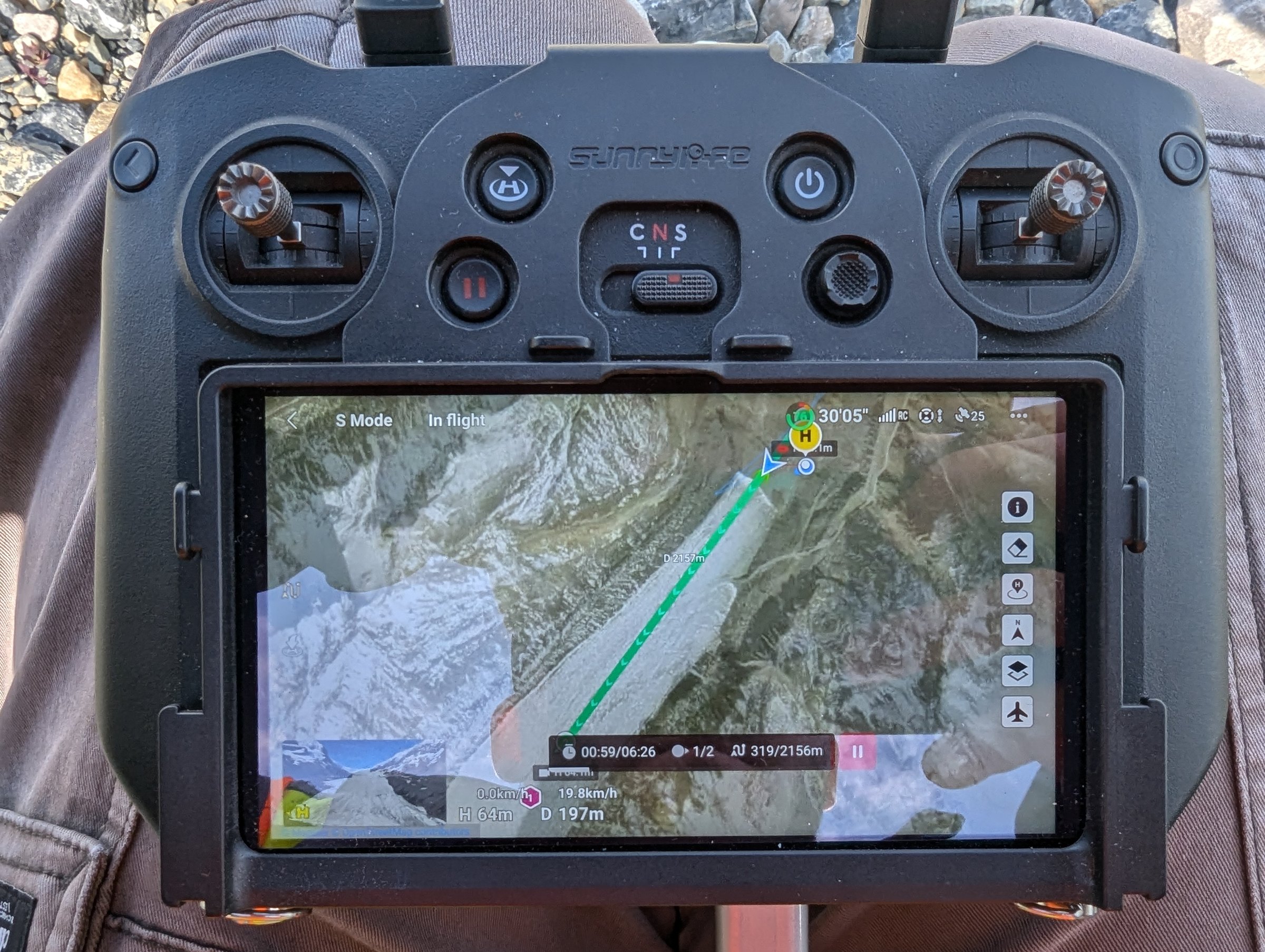
PRODUCTION SETUP ON THE ICE · CANON EOS C500 MKII · DJI DRONE · ATHABASCA GLACIER · JUNE 2024
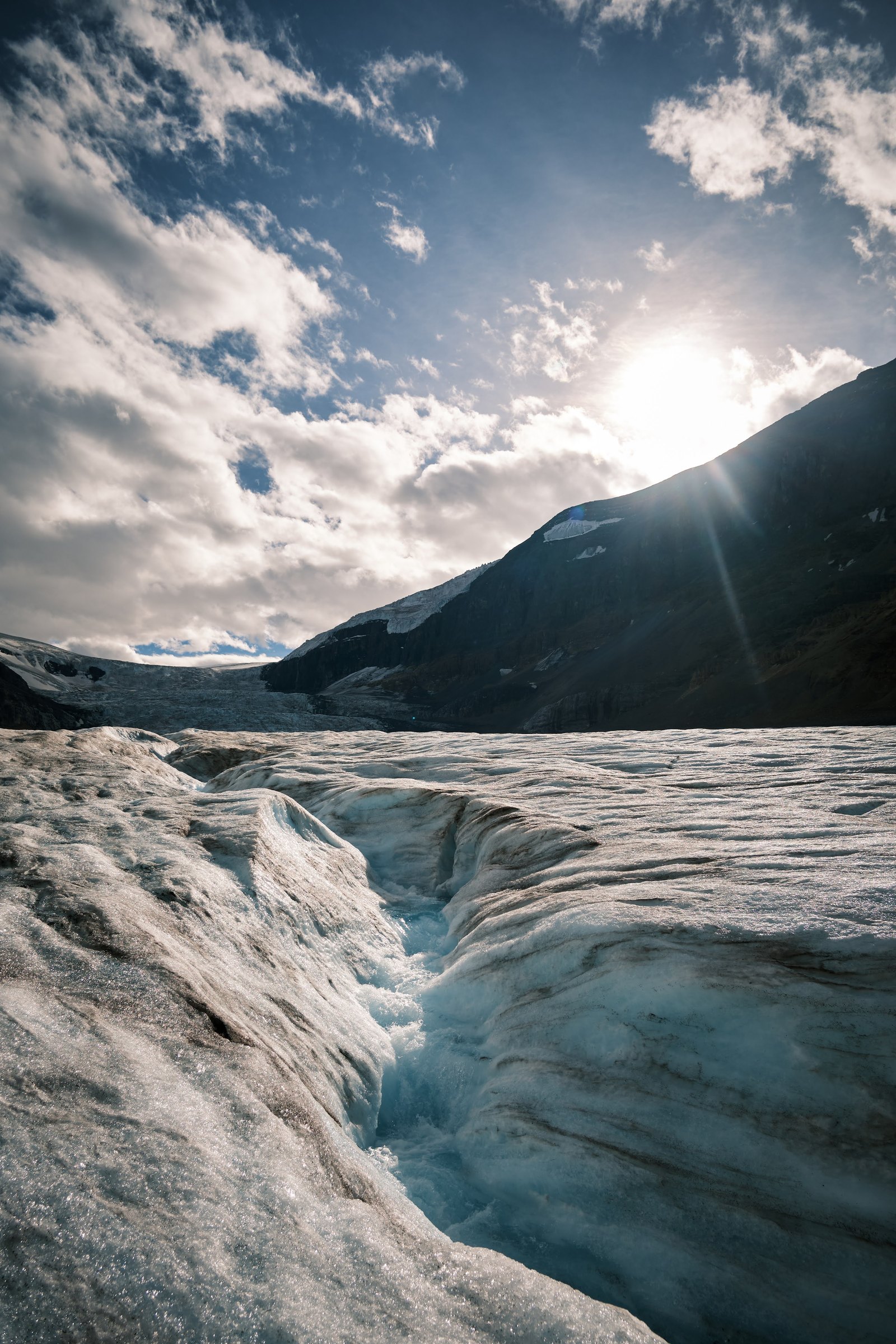
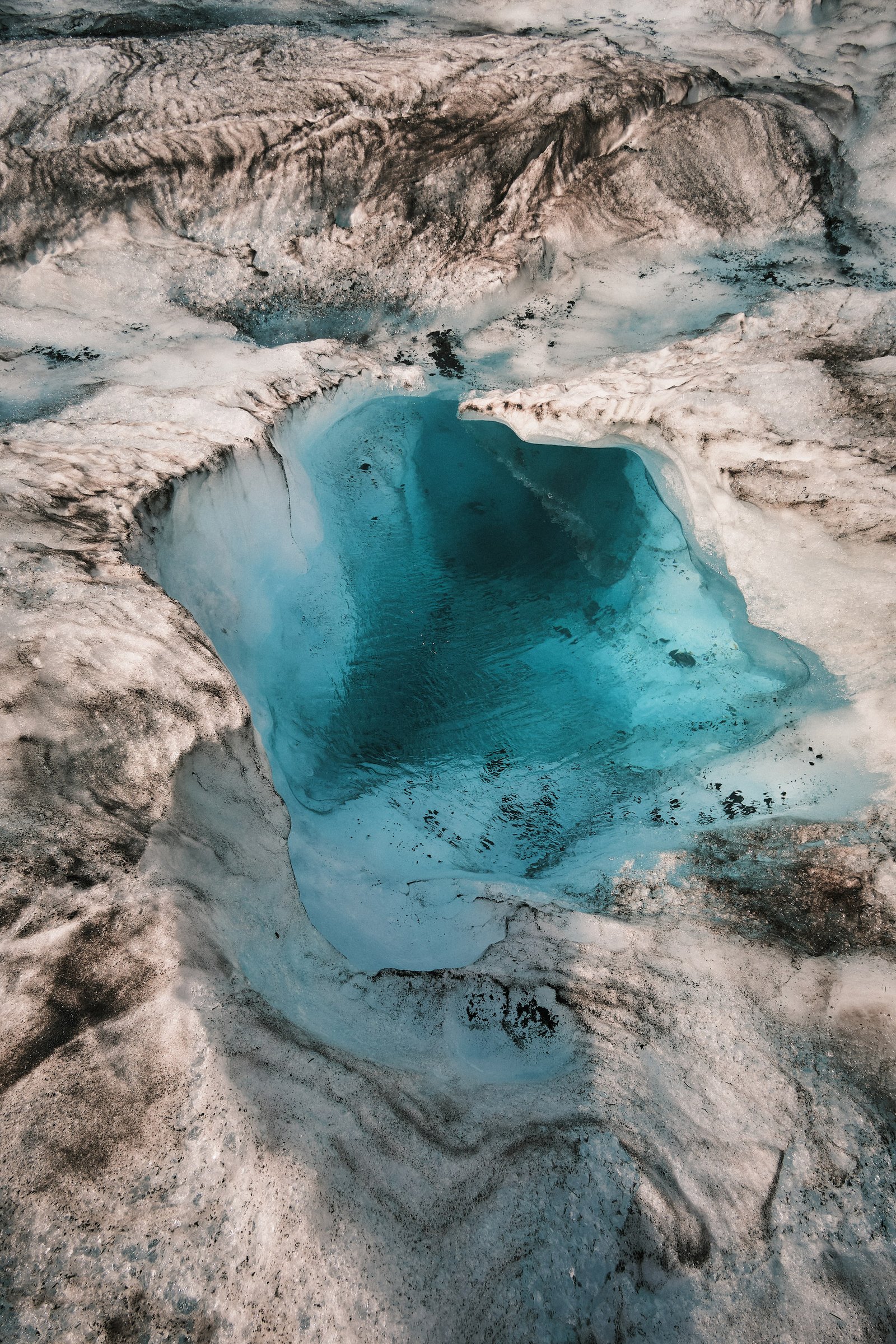
GLACIAL MELTWATER LANDSCAPE · TURQUOISE SUPRAGLACIAL POOL · ATHABASCA GLACIER · JUNE 2024
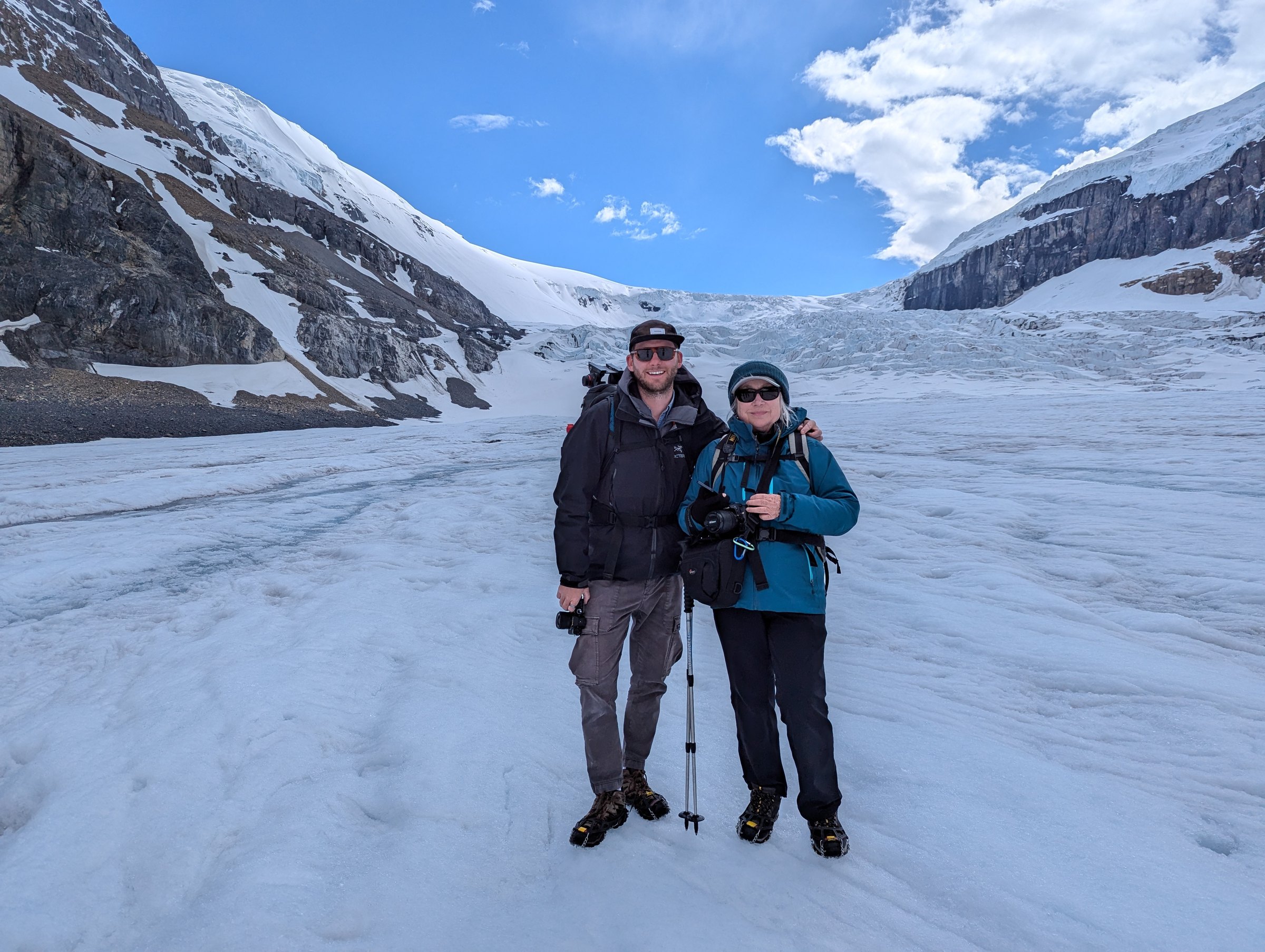
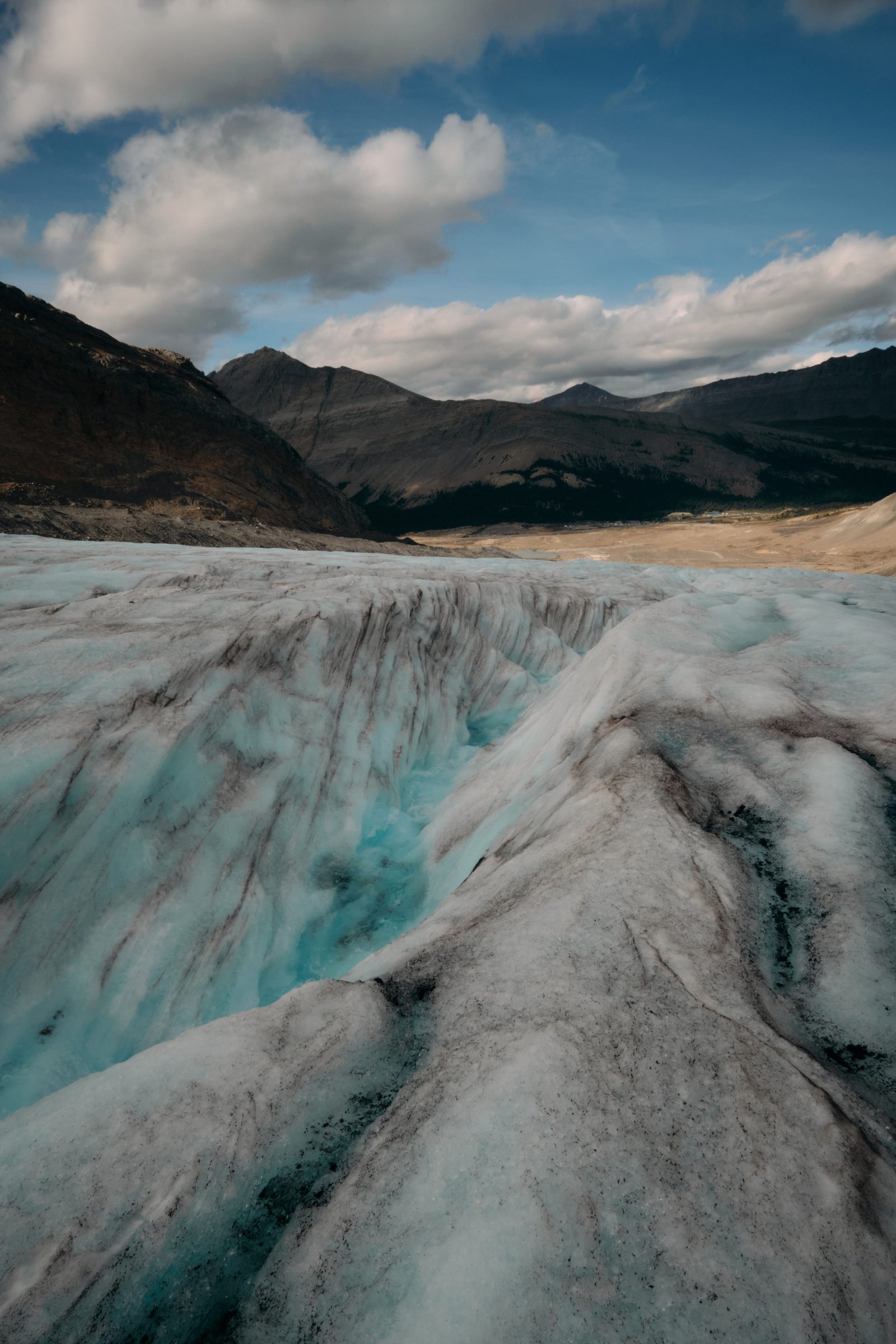
Being on the surface of Athabasca Glacier is disorienting in the best possible way. The scale is difficult to process from the ground. The ice rises in ridges and curves in every direction, broken by rivers of meltwater and darkened in places by cryoconite, the black carbon and mineral dust that accumulates on glacier surfaces and accelerates the very melting that brought it there. You're standing on something ancient while watching it actively disappear.
We spent time on the ground before flying, documenting the surface: the meltwater channels, the crevasse formations, the way light hits the deep turquoise blue of the ice where the surface is exposed. Those details are what give aerial footage its meaning. You have to understand the land first.
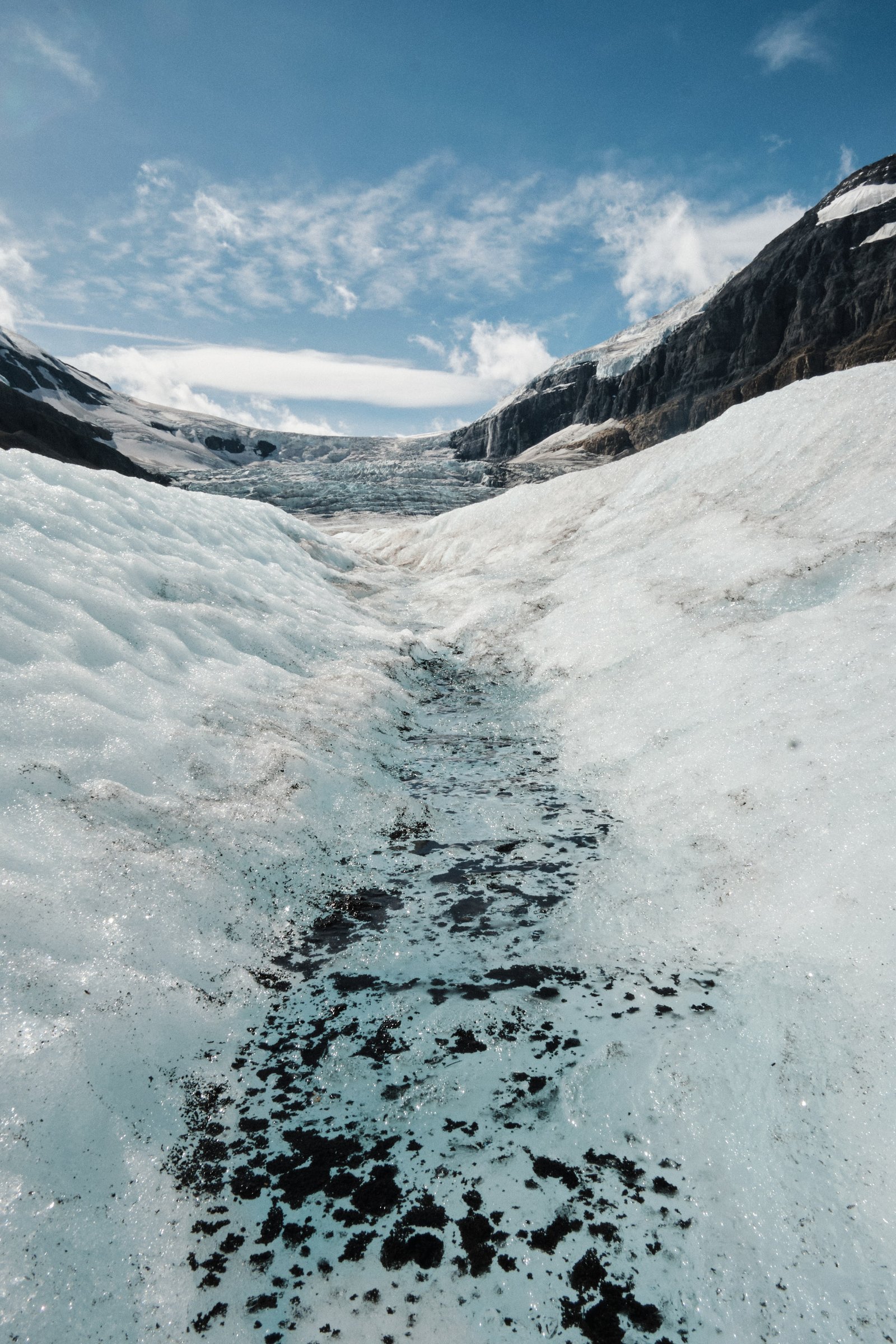
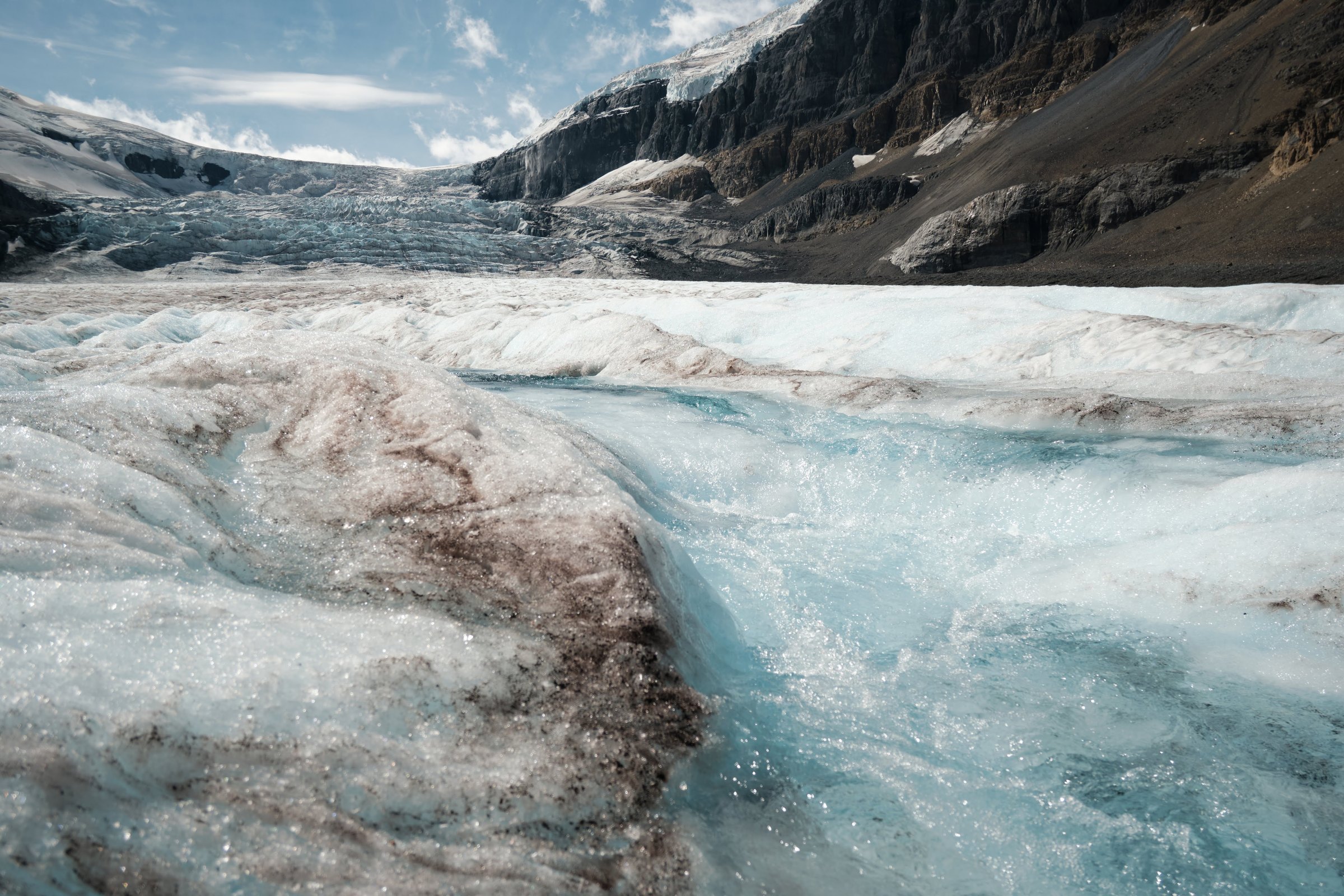
MELTWATER CHANNELS + CRYOCONITE · ATHABASCA GLACIER SURFACE · JUNE 2024
The drone gave us something no ground perspective can offer: the glacier as a living topography. From above, the cryoconite patterns read almost like brushstrokes across the ice. The meltwater pools glow an unreal turquoise, fed by the continuous melt happening from above and below simultaneously. The crevasse systems form their own landscape: ridges, valleys, rivers, all of it compressed into a surface that from 40 metres up looks almost painterly.
Jan recognized it immediately. This is what she had been working toward, images that are scientifically honest and aesthetically impossible to ignore. The drone footage became a core part of both the documentary and the exhibition.
Curator Jessica Turner came out to the glacier with us in June. She wasn't just advising from a distance. She was on the ice, in the same environment, developing an intimate understanding of what Jan was responding to. That presence mattered. The exhibition that came out of it, Contemplating Glaciers — A Dialogue, was grounded in that direct experience, and you could feel it.
The show ran August 2–31, 2024 at Tett Gallery in Kingston, Ontario. Jessica's curatorial framing drew directly on the urgency of what we were documenting: a glacier that has retreated more than 1.5 km since 1900, losing approximately 5 metres of depth every year. Her curator's statement opened with a line that stayed with me: "As we navigate through this exhibition, we are reminded that glaciers, though seemingly eternal, are vulnerable and transient."
The exhibition marked the culmination of Jessica's master's thesis, an exploration of how art and multi-sensory experience can be more effective than data alone at moving people toward climate action. Having been on the glacier with her, I think she's right.
We returned to Athabasca Glacier in August 2024. The change in just two months was visible and sobering. What had been bright white ice in June was now heavily darkened with cryoconite across much of the surface. The meltwater channels were wider and deeper. New crevasses had opened.
The shot I was most focused on was a GPS match cut, flying the drone to the exact same coordinates at the exact same altitude and heading as the June flight, and cutting the two clips together. No special effects, just time. Seeing the same stretch of glacier with a summer's worth of melt between two frames is one of the most direct things I've ever done with a camera. That clip is coming. I'll post it here when the documentary releases.
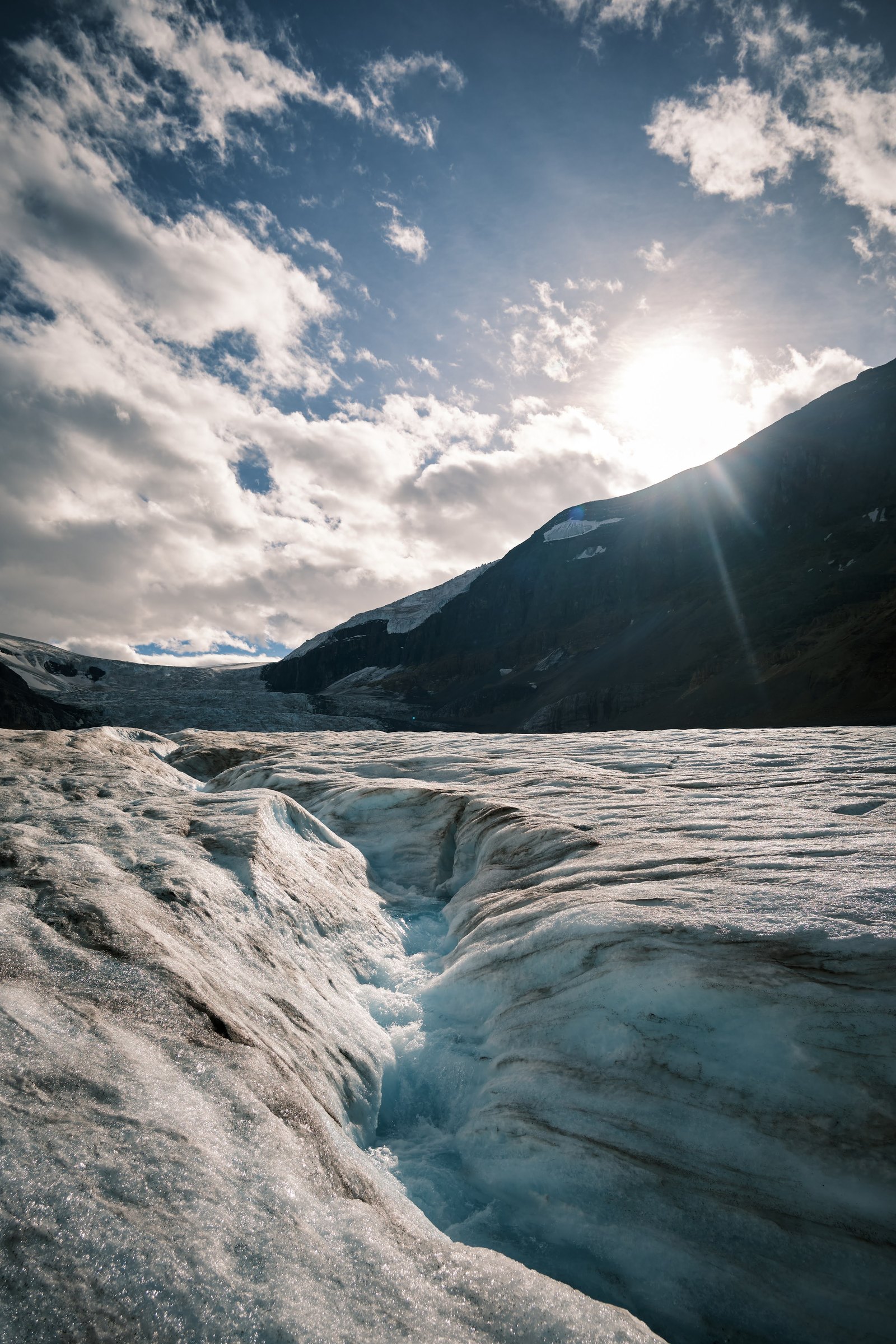
ATHABASCA GLACIER · COLUMBIA ICEFIELD · JASPER NATIONAL PARK · AUGUST 2024
The surface of a glacier is not what most people imagine. Up close, it's a landscape of extraordinary detail: the blue-white compression of ancient ice, the black rivulets of cryoconite tracing paths that follow the physics of water and light, the way the ice curves and folds as if it's breathing. These images belong in galleries because they don't look like what we expect nature to look like.
Jan has spent twenty years developing a visual language for this material. Working alongside her, I was constantly looking for the angles and details that captured not just what the glacier looks like, but what it is: massive, ancient, impossibly beautiful, and actively dying.
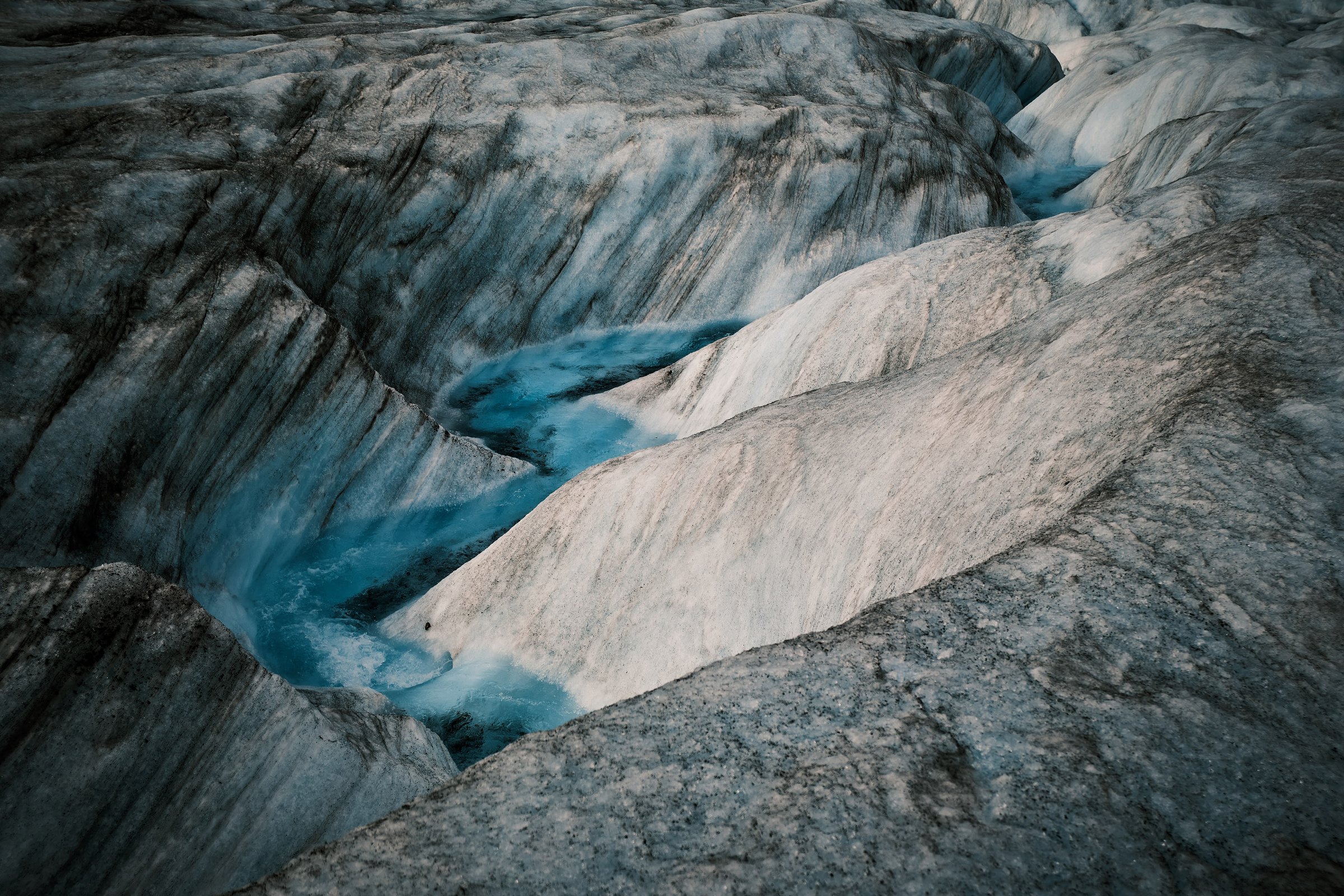
MELTWATER + CRYOCONITE DETAIL · ATHABASCA GLACIER · AUGUST 2024
Jan and I are actively seeking art galleries and exhibition venues to bring this body of work to new audiences. Contemplating Glaciers proved that this material resonates beyond the environmental community. Visitors responded to the photographs and footage as art first, and as science second. That dual register is exactly where we want to stay.
The work we produced together, aerial cinematography, close-up surface photography, the match-cut documentary footage, represents a unique archive of Athabasca Glacier at a critical moment in its history. We believe it belongs in gallery spaces, museums, and cultural institutions across Canada and internationally. If you represent a gallery or venue interested in hosting an exhibition, or if you're a curator or arts organization working in the climate and environment space, we'd love to hear from you.
"I hope my recent journey to the shrinking Athabasca Glacier will add a fresh perspective on the importance of glaciers — not only to our national identity that is inextricably linked to the landscape, but to future generations who stand to inherit our disappearing icons." — Jan Kabatoff
Drone use in Jasper National Park is normally prohibited. In June 2024, we secured what is believed to be the first-ever drone filming permit granted for Athabasca Glacier, approved by Parks Canada in recognition of the conservation and artistic significance of the project.
Jan Kabatoff is a BC-based interdisciplinary artist who has spent twenty years documenting glaciers around the world through photography, installation, and film. Her 2024 solo exhibition Contemplating Glaciers — A Dialogue, curated by Jessica Turner, was held at Tett Gallery in Kingston, Ontario. Learn more at jankabatoff.com.
Cryoconite is dark sediment, a mixture of mineral dust, black carbon, and microorganisms, that accumulates on glacier surfaces. Because it's darker than the surrounding ice, it absorbs more solar radiation, accelerating melting. The cryoconite channels and deposits across Athabasca Glacier are among the most visible signs of its accelerating retreat.
Yes. The glacier has retreated more than 1.5 km and lost over half its volume since 1900, currently losing approximately 5 metres of depth per year. Scientists project it could be gone within this century if current warming trends continue. That's the reality this project documents.
If you represent an art gallery, museum, or cultural institution interested in exhibiting this work, please reach out directly through the contact page. We're actively seeking Canadian and international venues for the next iteration of this exhibition.
GALLERY SUBMISSIONS & VENUE INQUIRIES
Jan Kabatoff and Dave Copithorne are actively seeking galleries, museums, and cultural institutions to exhibit Contemplating Glaciers and the broader Athabasca Glacier body of work. Aerial footage, large-format photography, and documentary film, available for exhibition in Canada and internationally.
Get in Touch Drone & aerial →