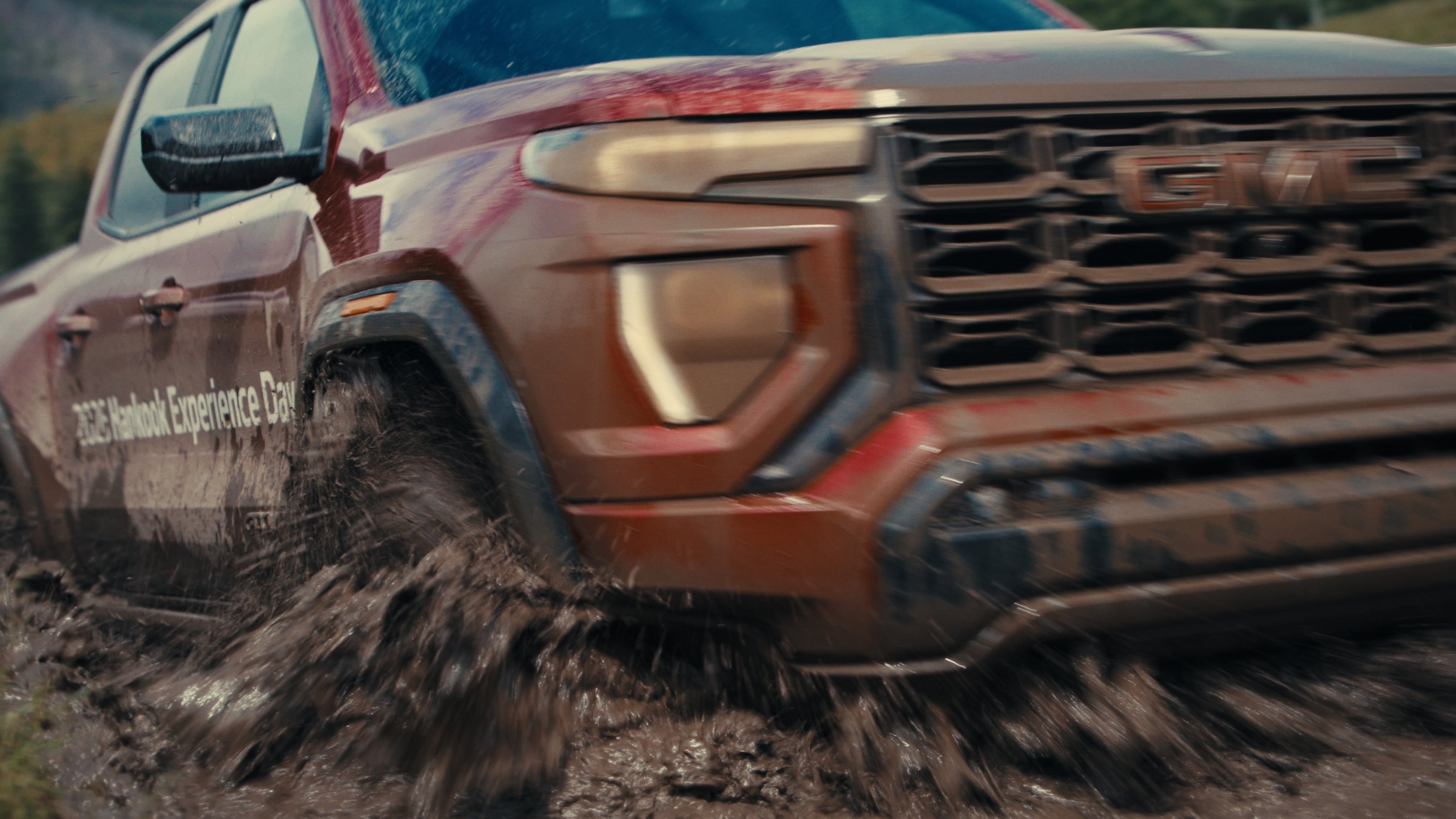
Hankook brought me on to shoot a promotional piece for their new MT2 mud-terrain tire. A tire is a hard product to make exciting on its own, so the whole job came down to building energy around it through the trucks, the terrain, and the way the camera moves. My focus as a DP was simple: make these trucks look fast and aggressive as they ripped through the mud.
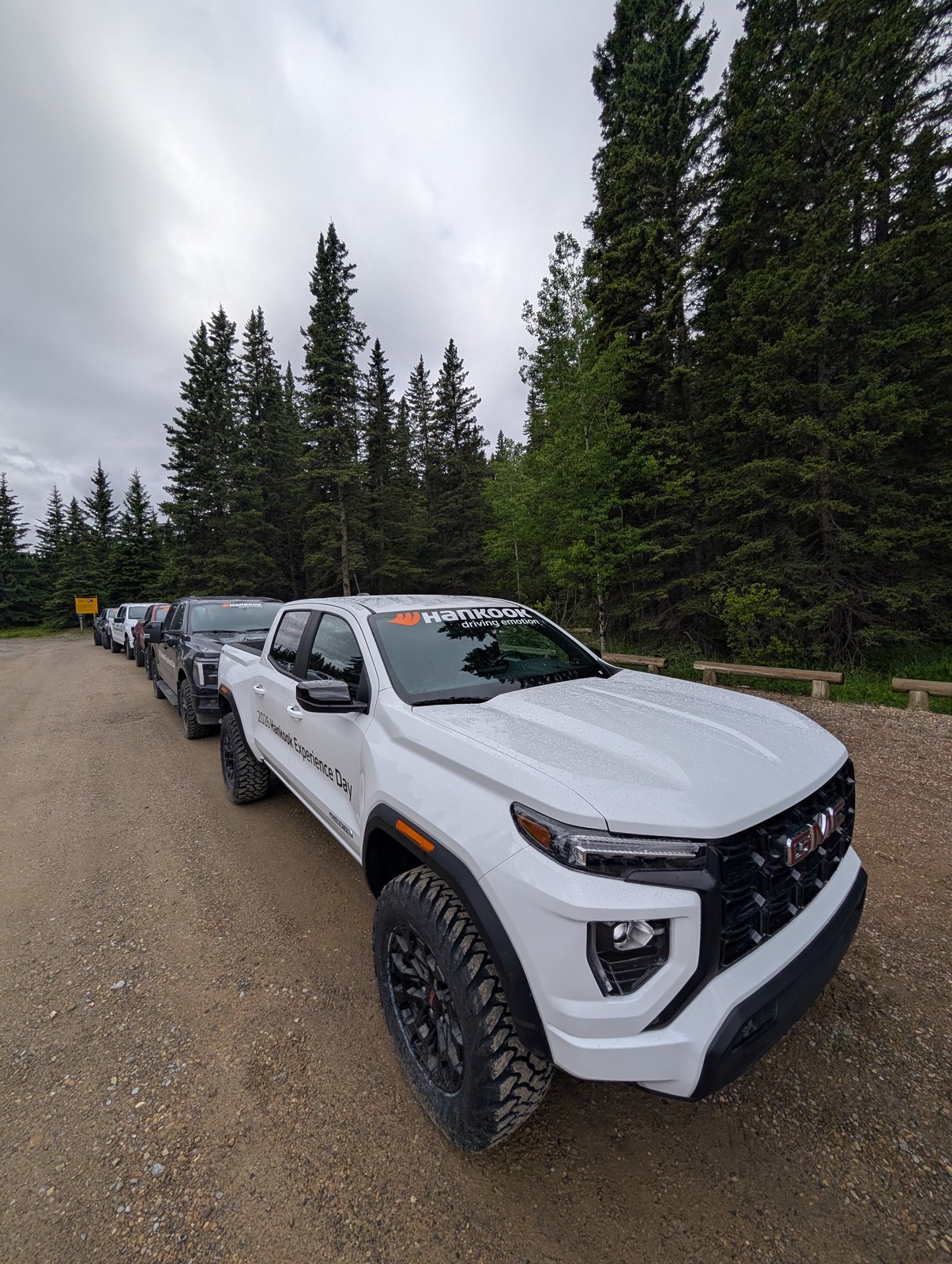
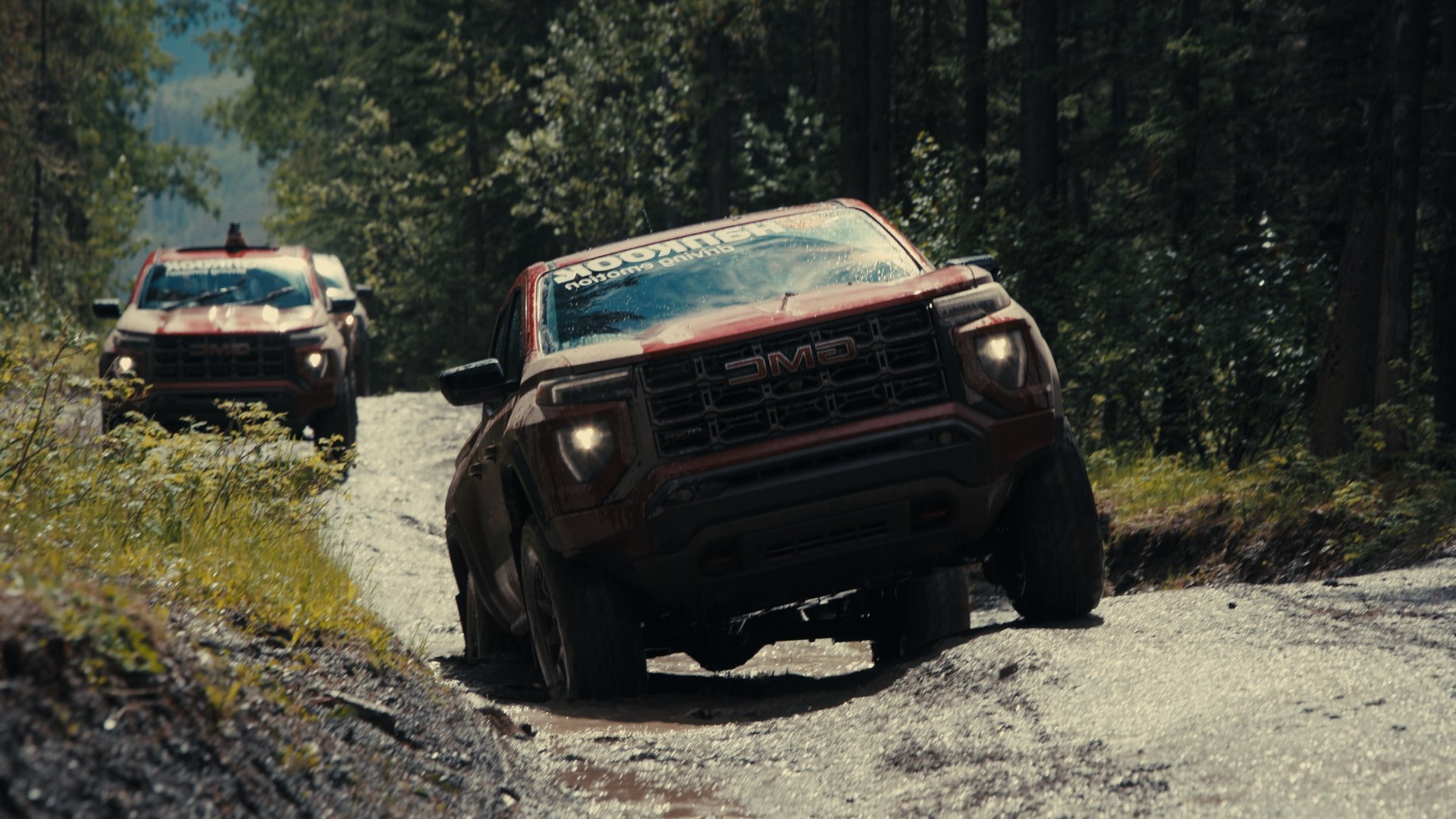
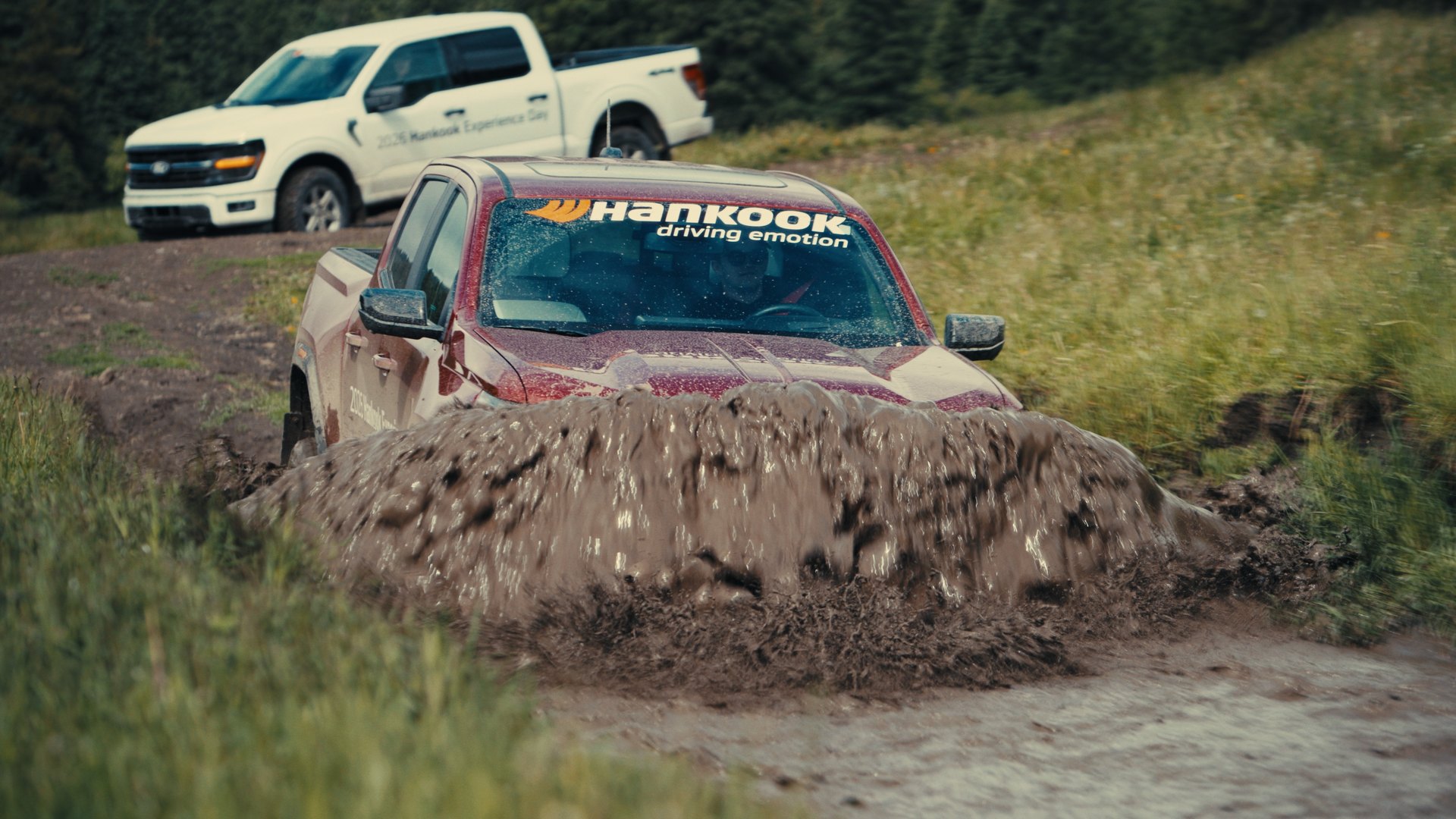
Over two days I filmed a fleet of vehicles running real backcountry mud and trail: Ford F-150s, GMC Canyons, Toyota Tacomas, and SUVs like the Acadia and Yukon. A lot of the driving through the deep stuff was actually slow and careful, so the challenge was shooting it in a way that turned that into something kinetic and cinematic.
The Location: McLean Creek
We shot at McLean Creek near Bragg Creek, a public land-use area west of Calgary with exactly the kind of terrain a mud tire is built for. Within minutes of hitting the trails the trucks were already caked in dirt, which is the best thing that can happen on a shoot like this. Clean trucks don't sell mud tires.
My Approach: Handheld and Dynamic
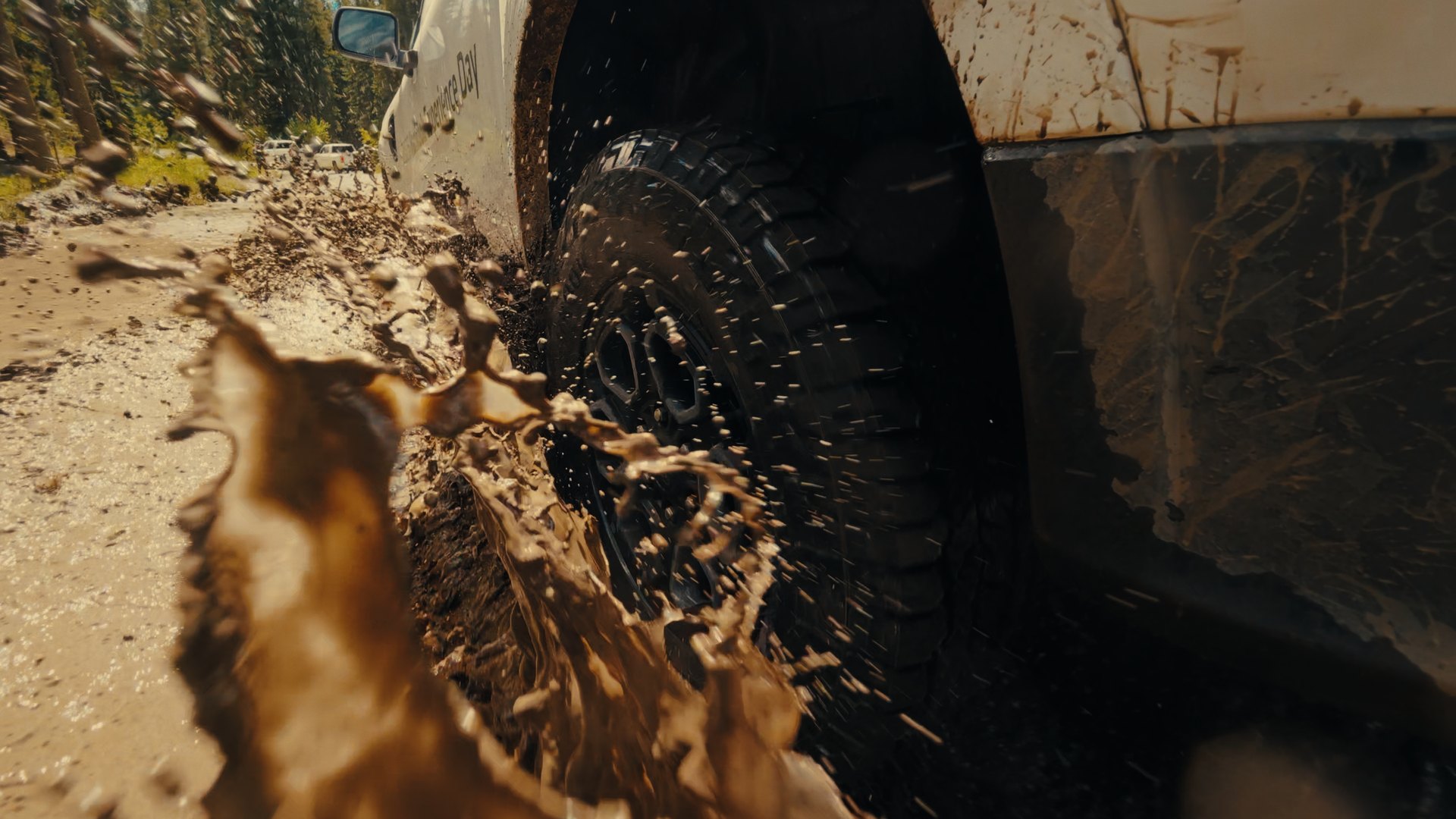
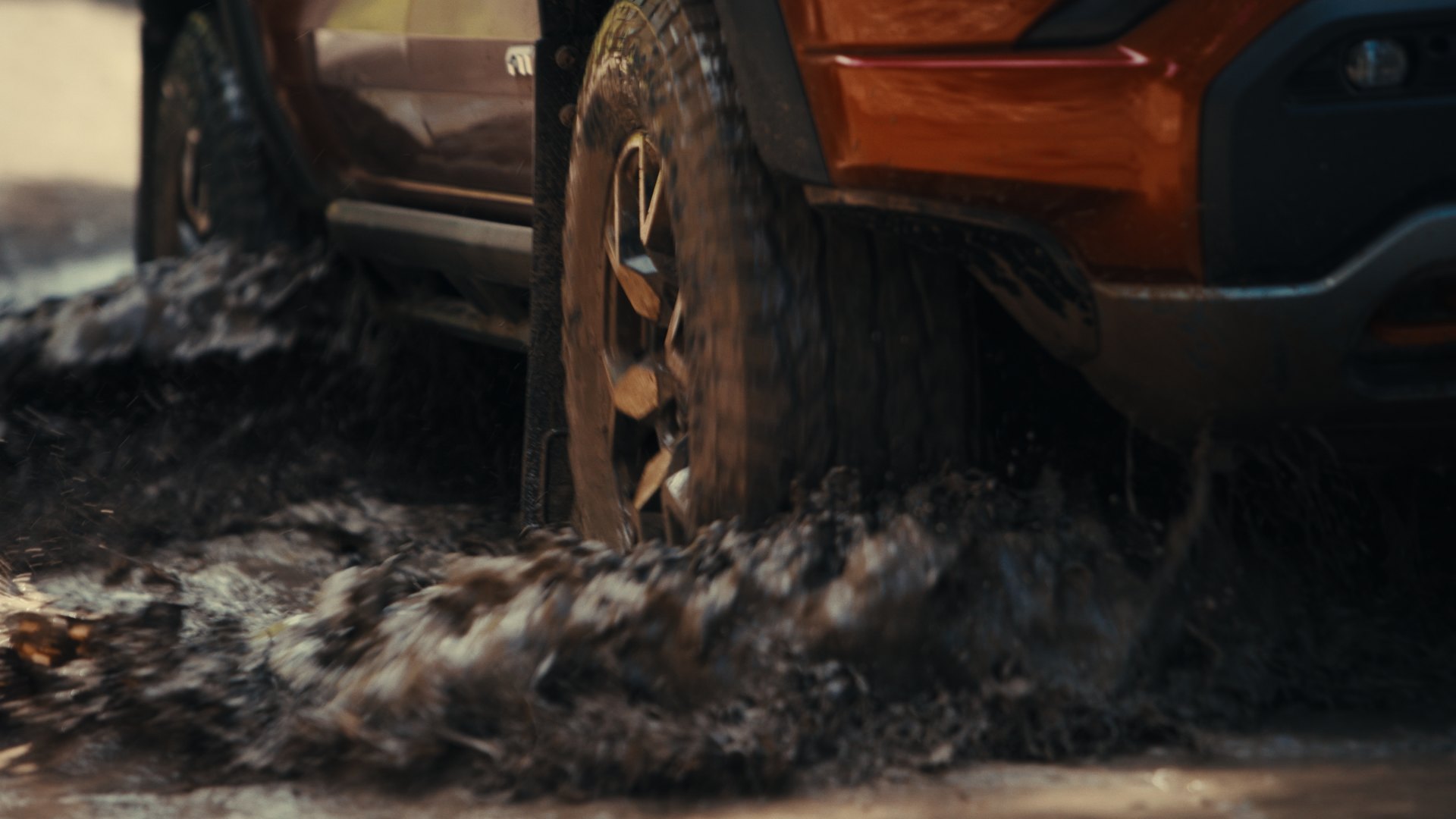
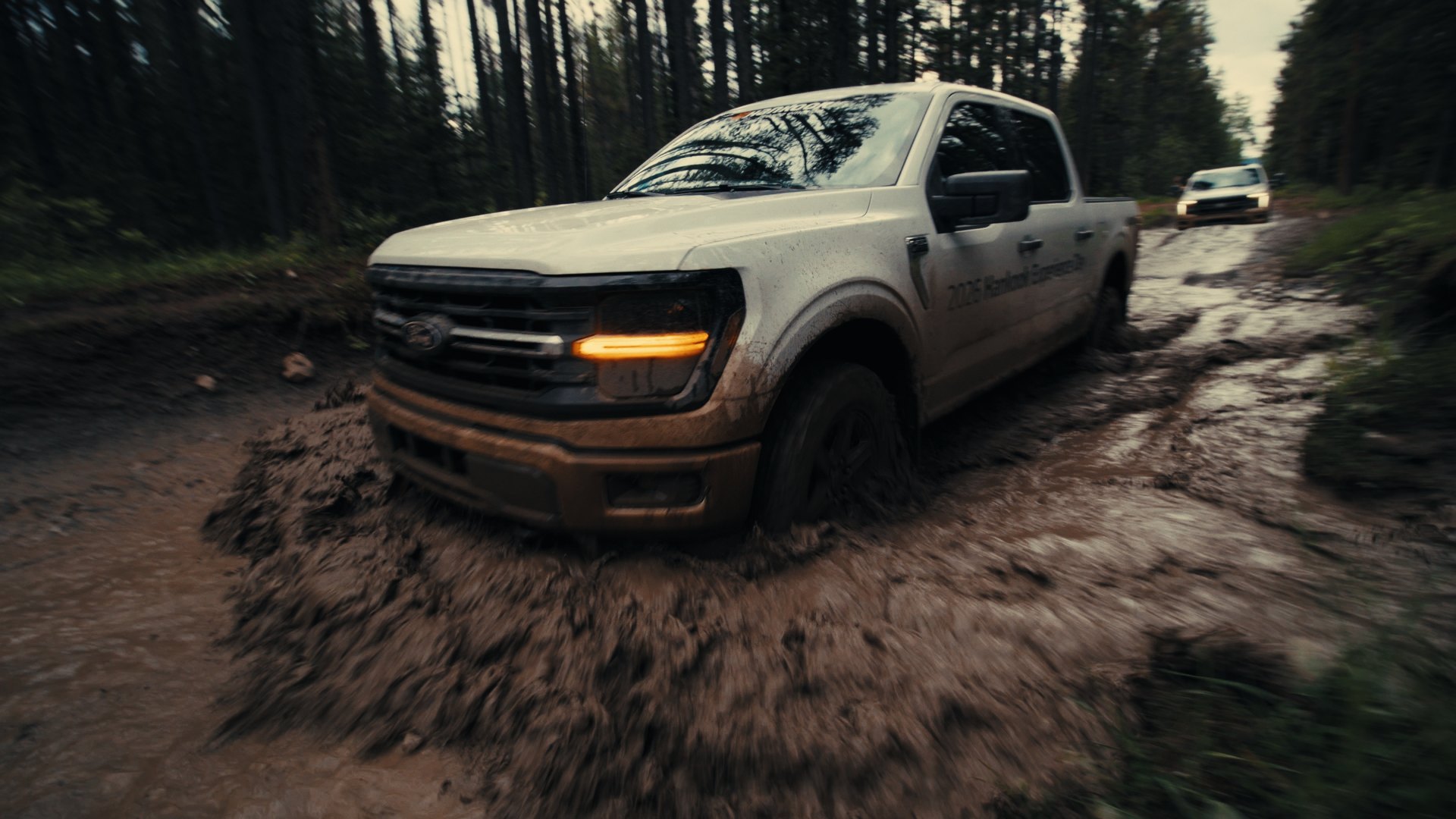
I wanted these clips to feel alive, so I left the gimbal behind and shot the whole thing handheld. That choice does a lot of the work. The natural movement and small imperfections of operating by hand give the footage an energy and urgency that a locked-off gimbal shot just doesn't have. I worked a tight shot list, running the trucks at the same mud section over and over, getting low and close, and treating every pass like a hero shot of the tire biting in and the spray coming off the tread.
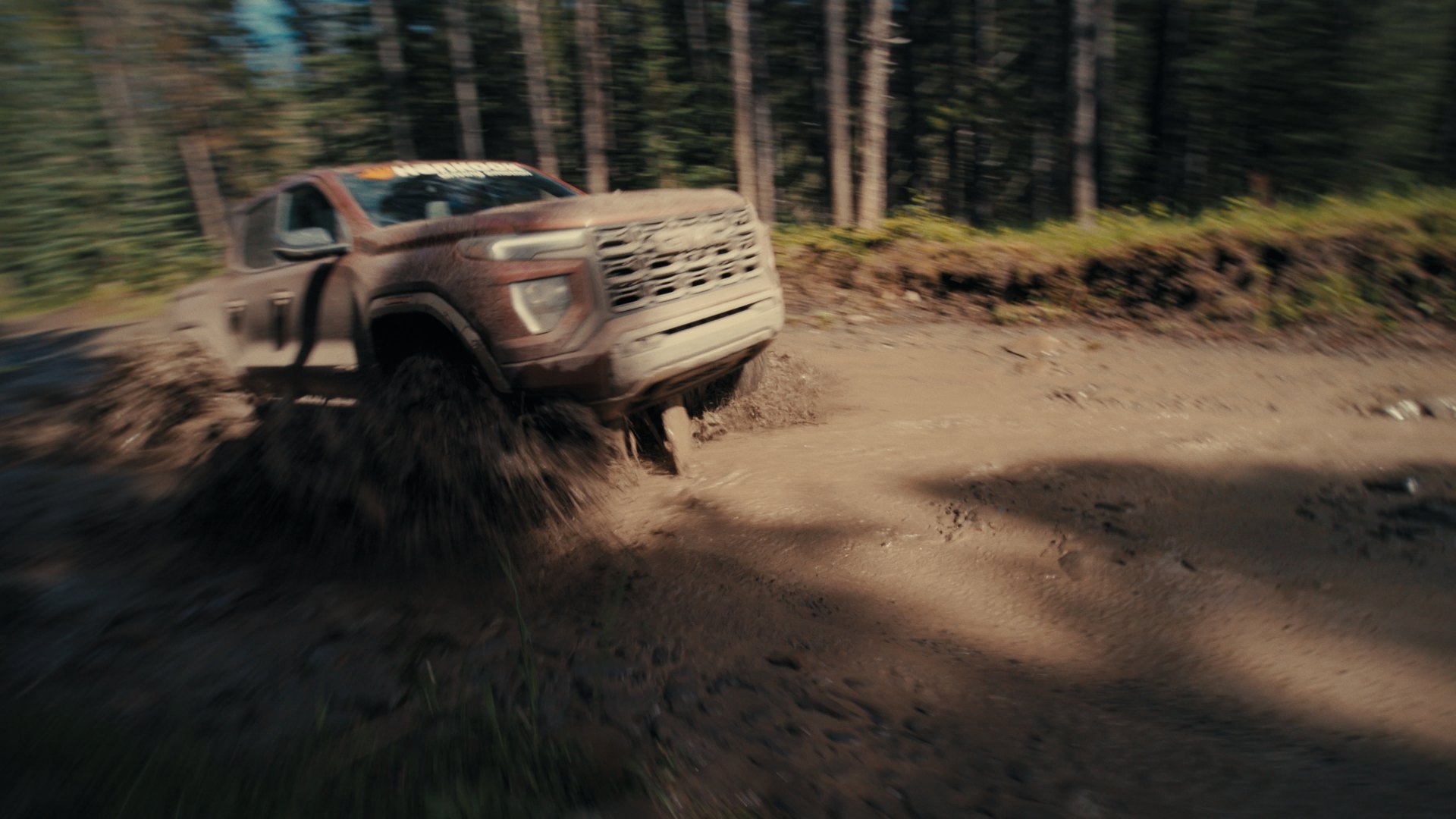
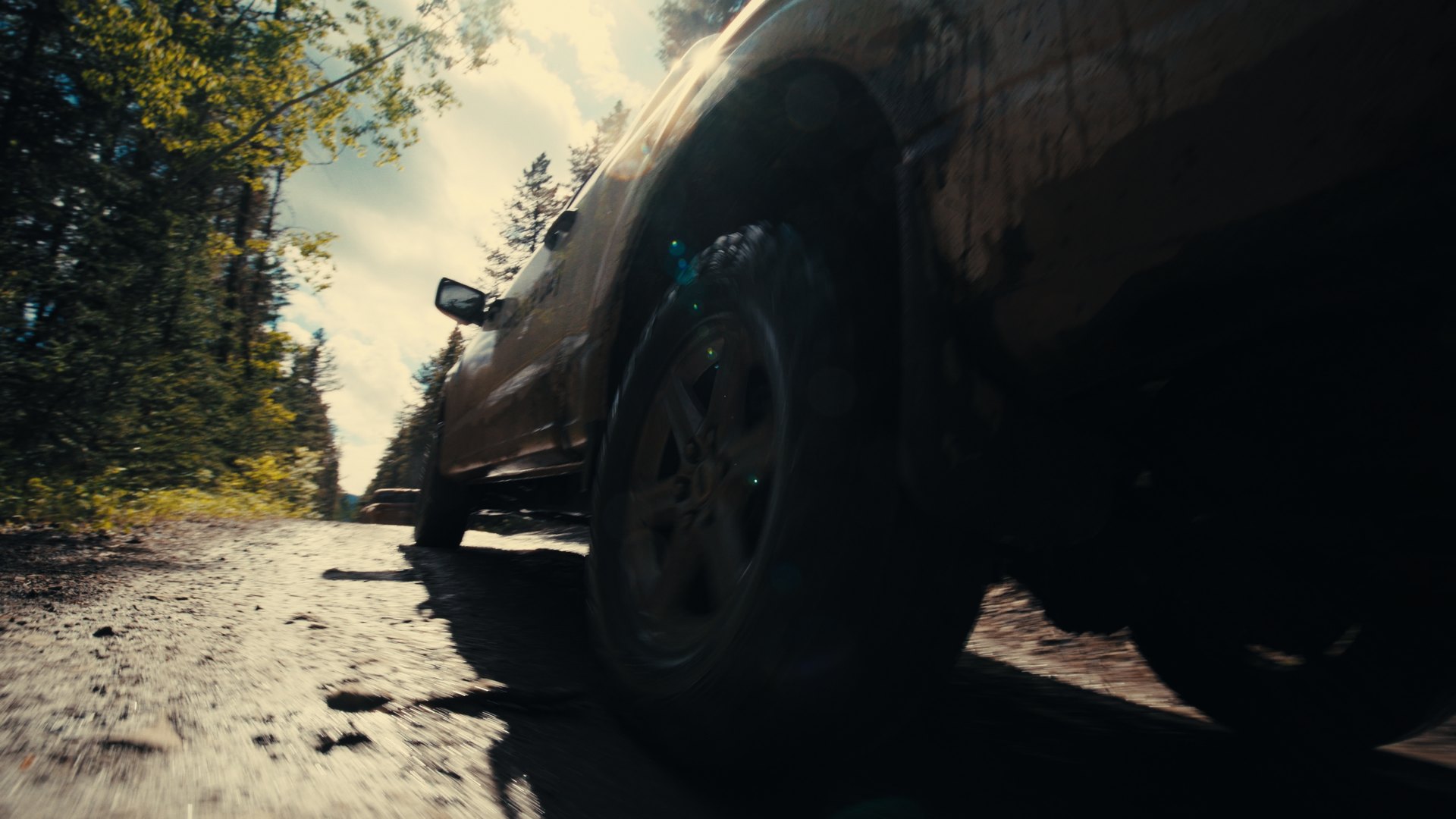
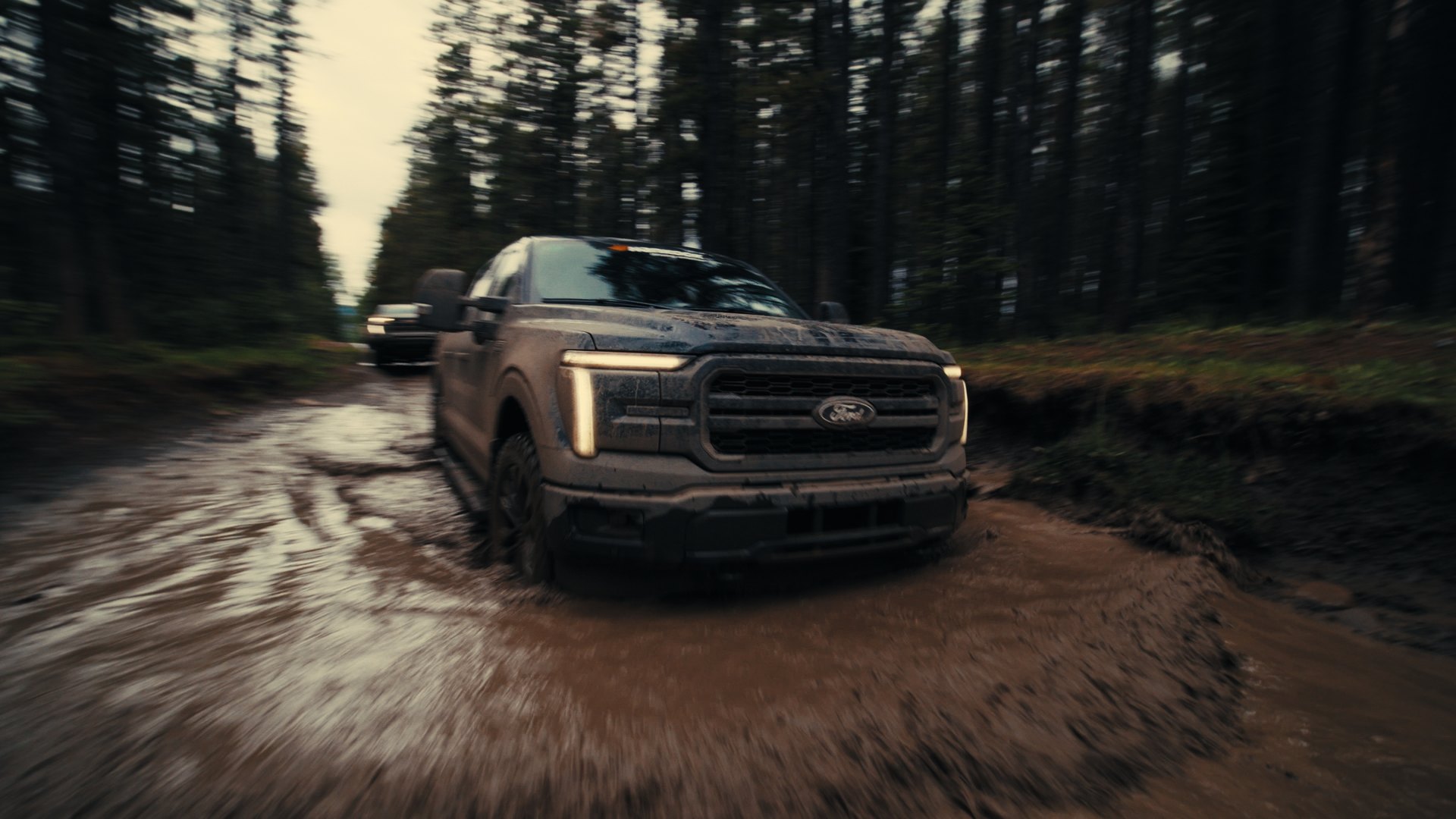
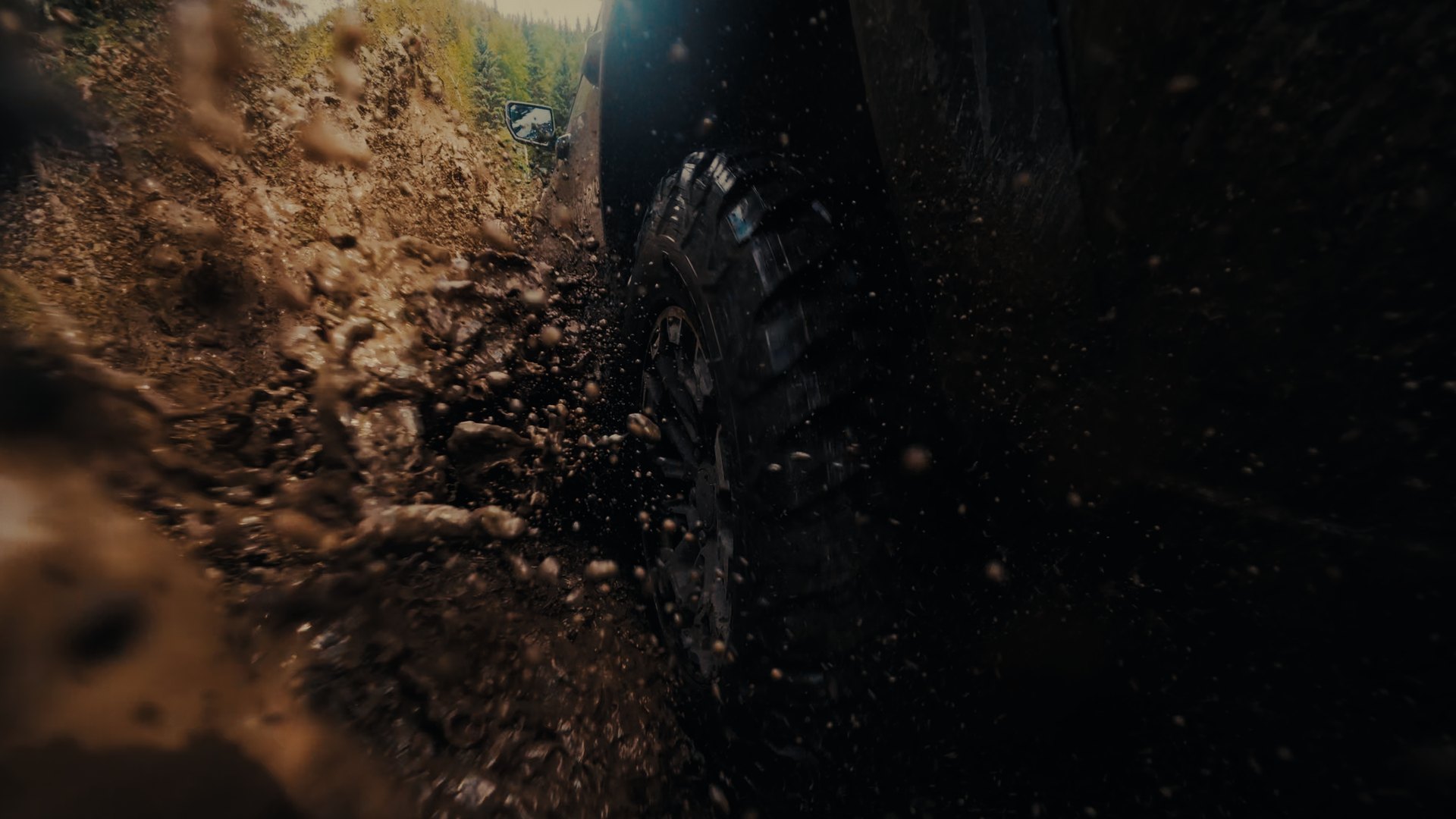
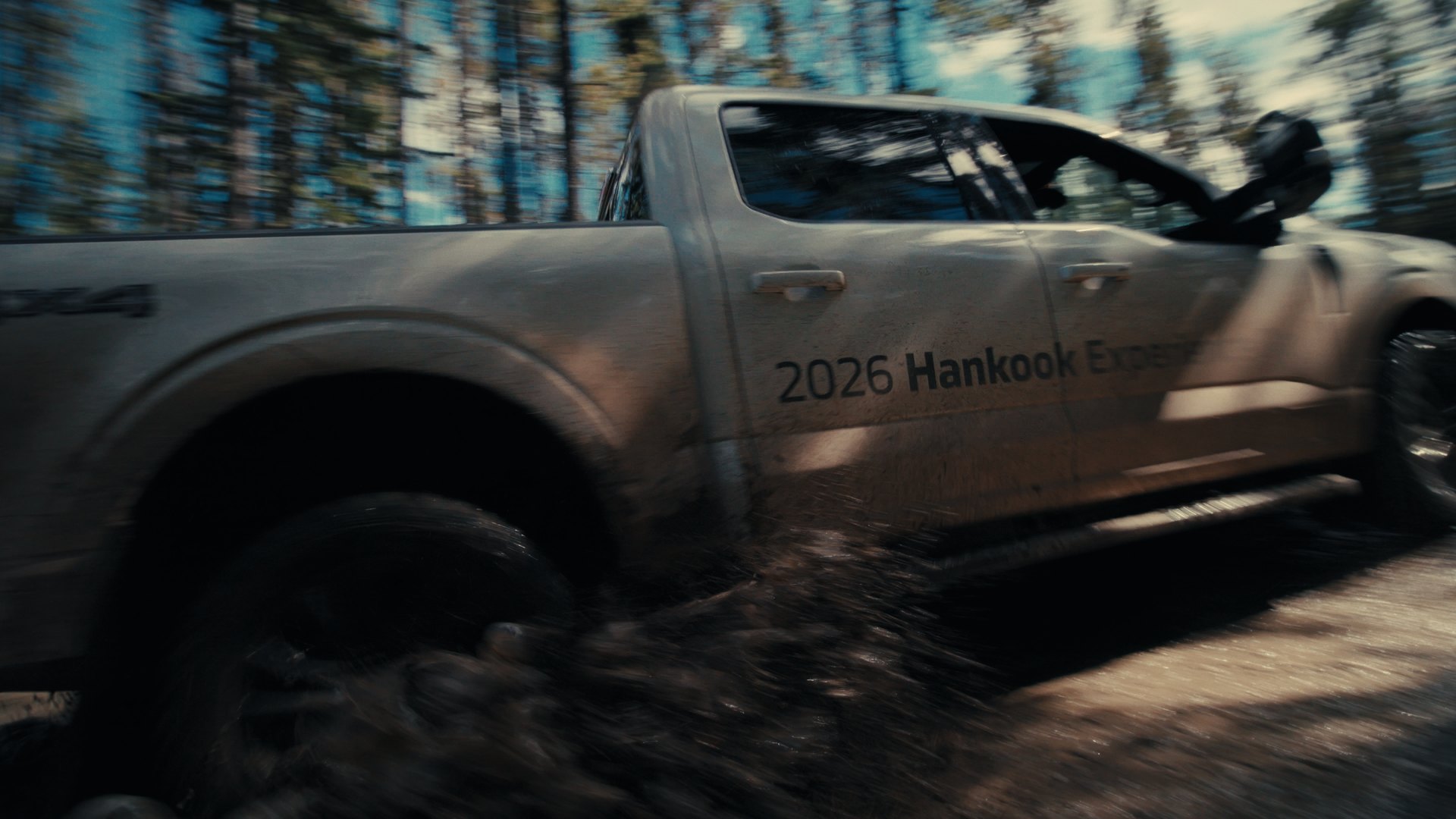
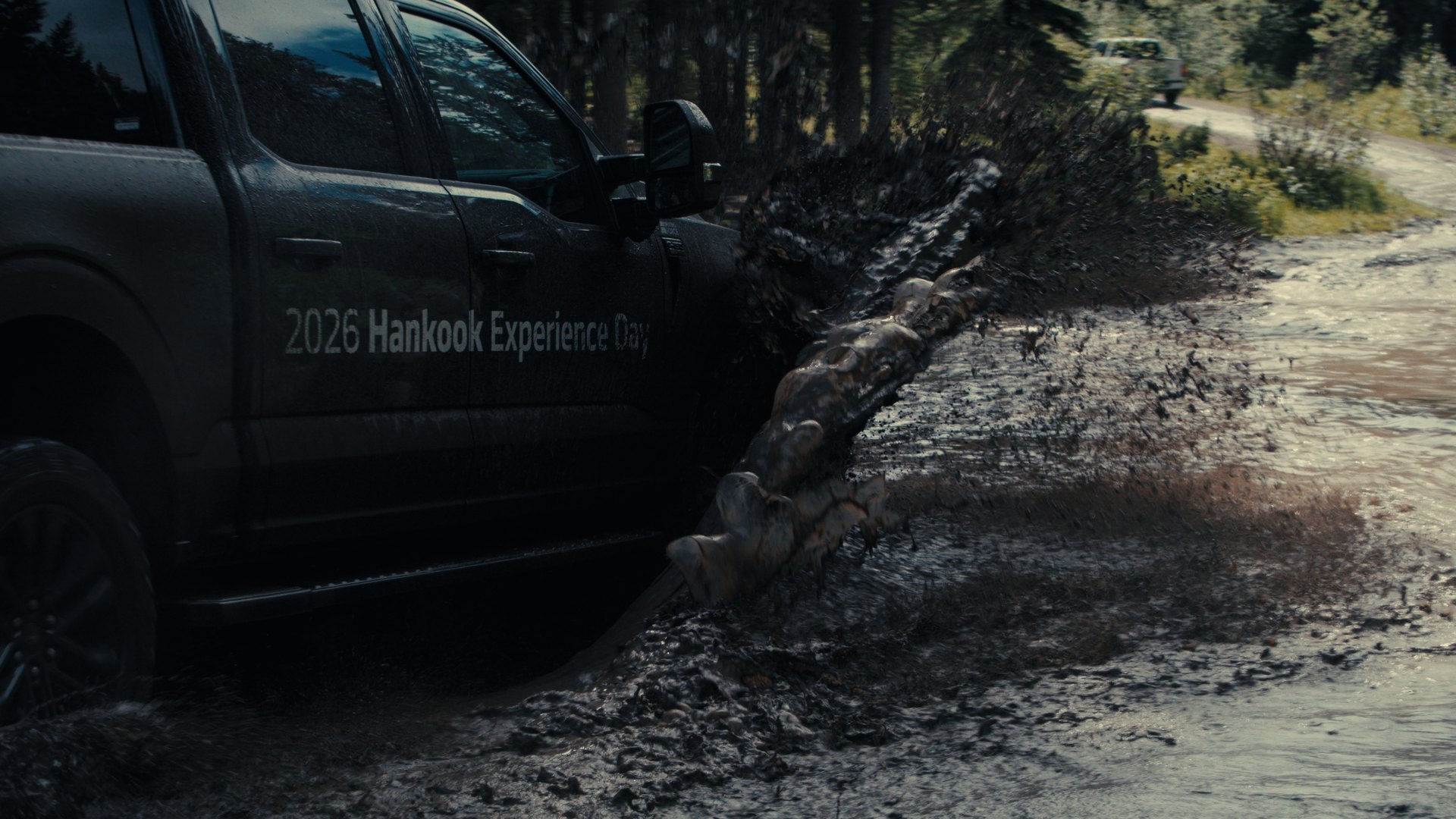
FRAMES FROM THE COMMERCIAL · CANON C500 MKII · HANKOOK MT2 · 2026
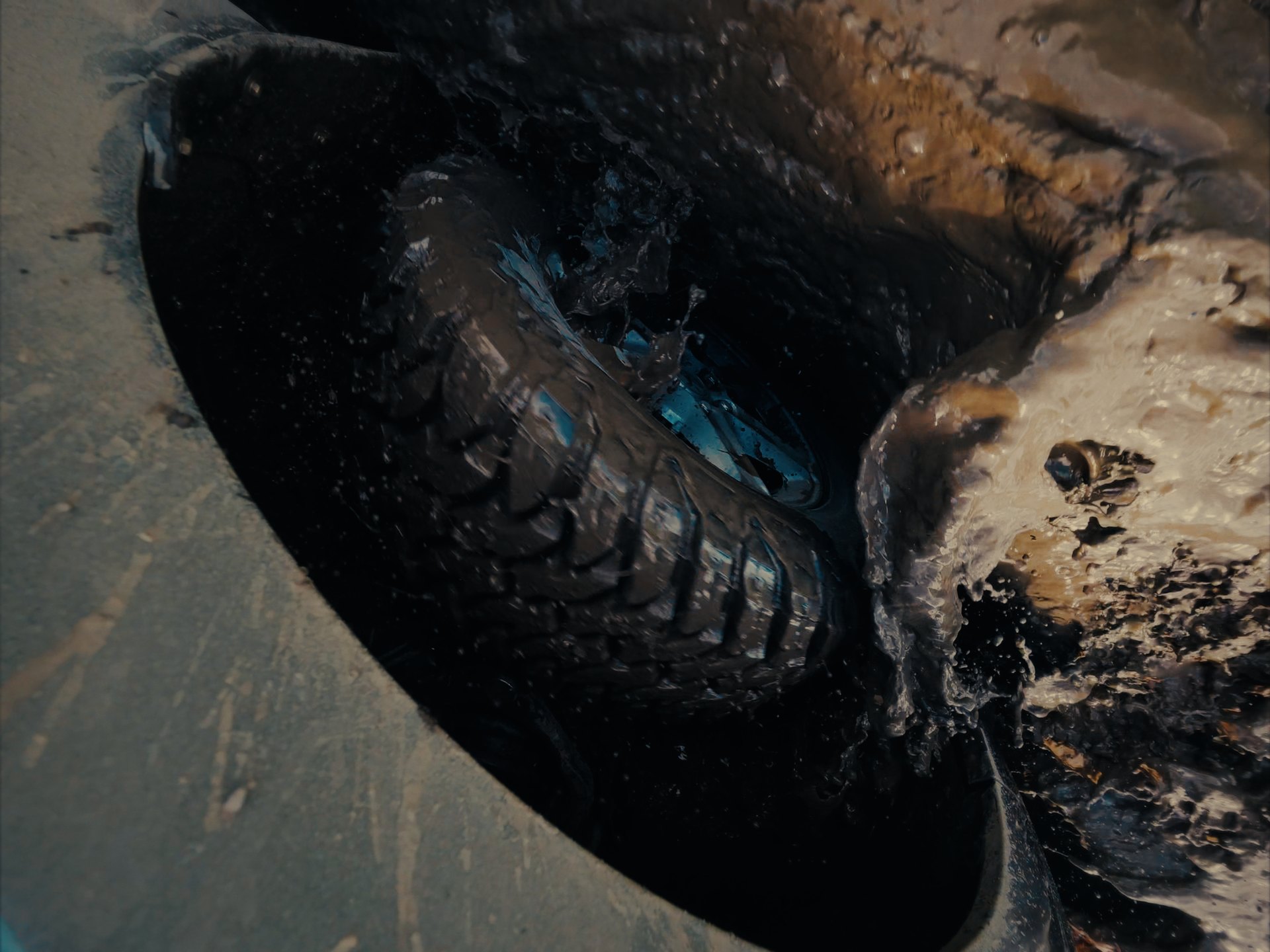
Tire POV: Rigging the DJI Action 6
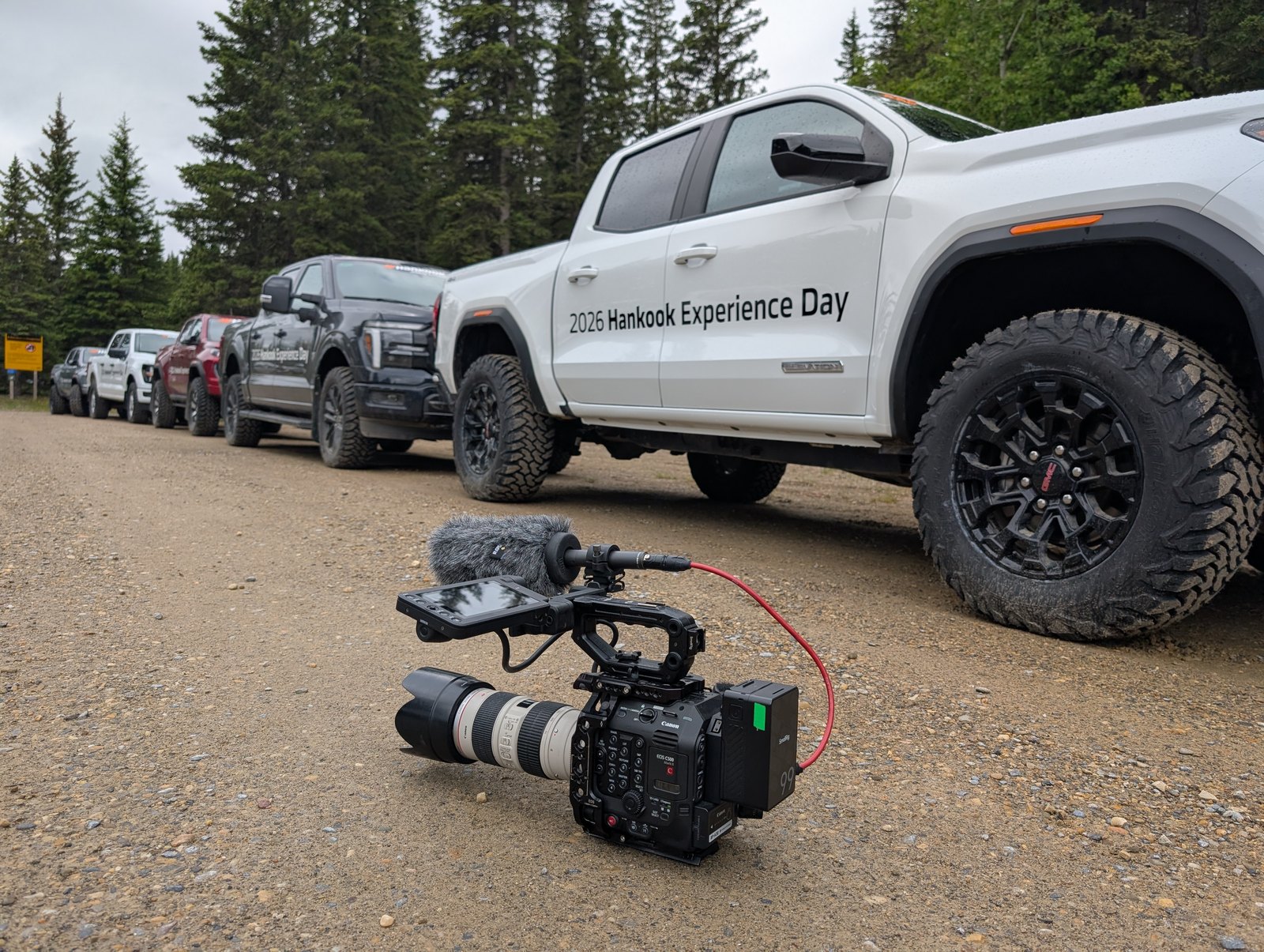
The shot that really sells a mud tire is the one you can't get any other way, down at the tread, in the mud, watching it claw through. I rigged a DJI Action 6 right at the wheels to grab that tire-level POV as the trucks pushed through the bog, then shot all the hero angles handheld on my Canon C500 MKII. The action camera gives the visceral, in-the-dirt perspective and the cinema camera gives the polish. Together they cut into something with real punch.
The Look: Motion Blur Meets Slow Motion
Here's the trick to making slow driving feel fast. The trucks were often crawling through the technical mud sections, but you'd never know it. On the action passes I dropped the shutter to let the motion blur streak across the frame, so even a slow-moving truck reads as aggressive and kinetic. Then I flipped the other way and shot the tire and mud-spray details at 120fps, stretching a half-second of grip into a slow, weighty moment. That contrast between blurred speed and crisp slow motion is what gives the piece its energy.
Driven by Richard Warrington
None of the action happens safely without the right person behind the wheel. Hankook brought on Richard Warrington, a professional driver and off-road trainer, to handle the driving through the terrain. Having a pro setting the pace meant I could put the camera exactly where the shot needed it, knowing the driving would be precise and repeatable take after take. You can follow Richard on Instagram at @richardwarrington.
By day two we had the whole thing dialed in, the mud sections, the camera positions, the timing of each pass, and the footage just kept getting better. The result is a piece that does exactly what it set out to do, making a mud-terrain tire look like the star of the show.
FRAMES
From the Commercial
← Drag to scroll →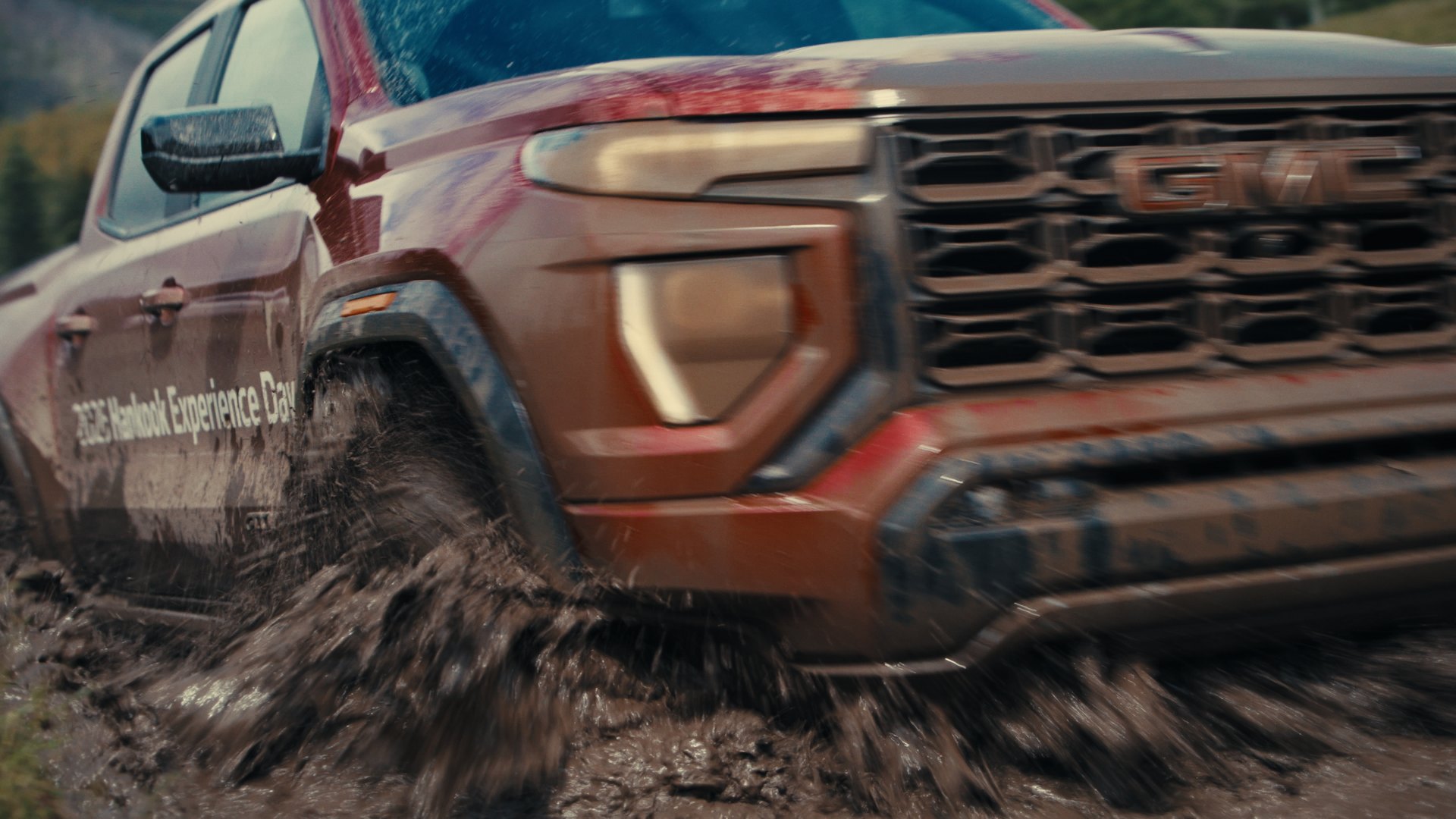
Automotive Commercial Filming FAQ
Do you film cars and vehicles?
Yes. Vehicles can be part of almost any shoot, and I bring the same cinematic approach to them as anything else, finding the angles and movement that make the subject feel alive. The Hankook MT2 piece is one example, and vehicle work fits naturally into commercial, branded, and documentary projects. More on commercial production →
How do you get cinematic POV shots of tires and vehicles?
By rigging compact action cameras directly to the vehicle. On this shoot I mounted a DJI Action 6 at the wheels for tire-level POV of the mud, then shot the hero angles handheld on a Canon C500 MKII. The action camera gives the visceral perspective, the cinema camera gives the polish.
Why shoot handheld instead of on a gimbal?
For an action piece like this, handheld adds energy. The subtle movement and weight of operating by hand make the trucks feel faster and more aggressive than a perfectly smooth gimbal shot. A gimbal is great when a shot needs to float, but for mud and speed, handheld gives the footage its urgency.
How do you make slow off-road driving look fast on camera?
Low shutter speeds for motion blur on the action passes, 120fps slow motion on the tire and mud-spray details, low and close camera positions, and fast, deliberate camera moves. Even a truck crawling through a bog can feel kinetic when the camera does the work.