Music videos aren't my main thing. Most of my year is commercials, documentaries and branded work. But every so often one comes along that I can't say no to, and Take My Hand by Paul Byrne was one of the most fun shoots I've had in a long time.
Paul is a singer-songwriter with a guitar and a lot to say. Take My Hand is a song about war: the cost of it, the people it touches, and the machine it has become. We shot it over a couple of days in Naramata, BC, on the east shore of Okanagan Lake, with cliffs, vineyards and the lake itself as our set. I directed, shot and edited it.
The Approach: Let the Light Do the Work
For a song like this, I didn't want a lit set. I wanted the Okanagan to carry it. So instead of building the shoot around lights, I built it around the clock: golden hour, sunset, blue hour and firelight after dark. Every scene was scheduled to a window of light, and the performance went wherever the light was best at that moment.
Shooting with natural light on a music video is a trade. You give up control and you work fast, because golden hour lasts about as long as the song plays a few times through. What you get back is a look you can't fake: real flare, real warmth on skin, real depth in the sky.
Planning your own shoot around the light? I built a golden hour and blue hour planner for Calgary and the Rockies, with sun direction and a sunset cloud outlook.
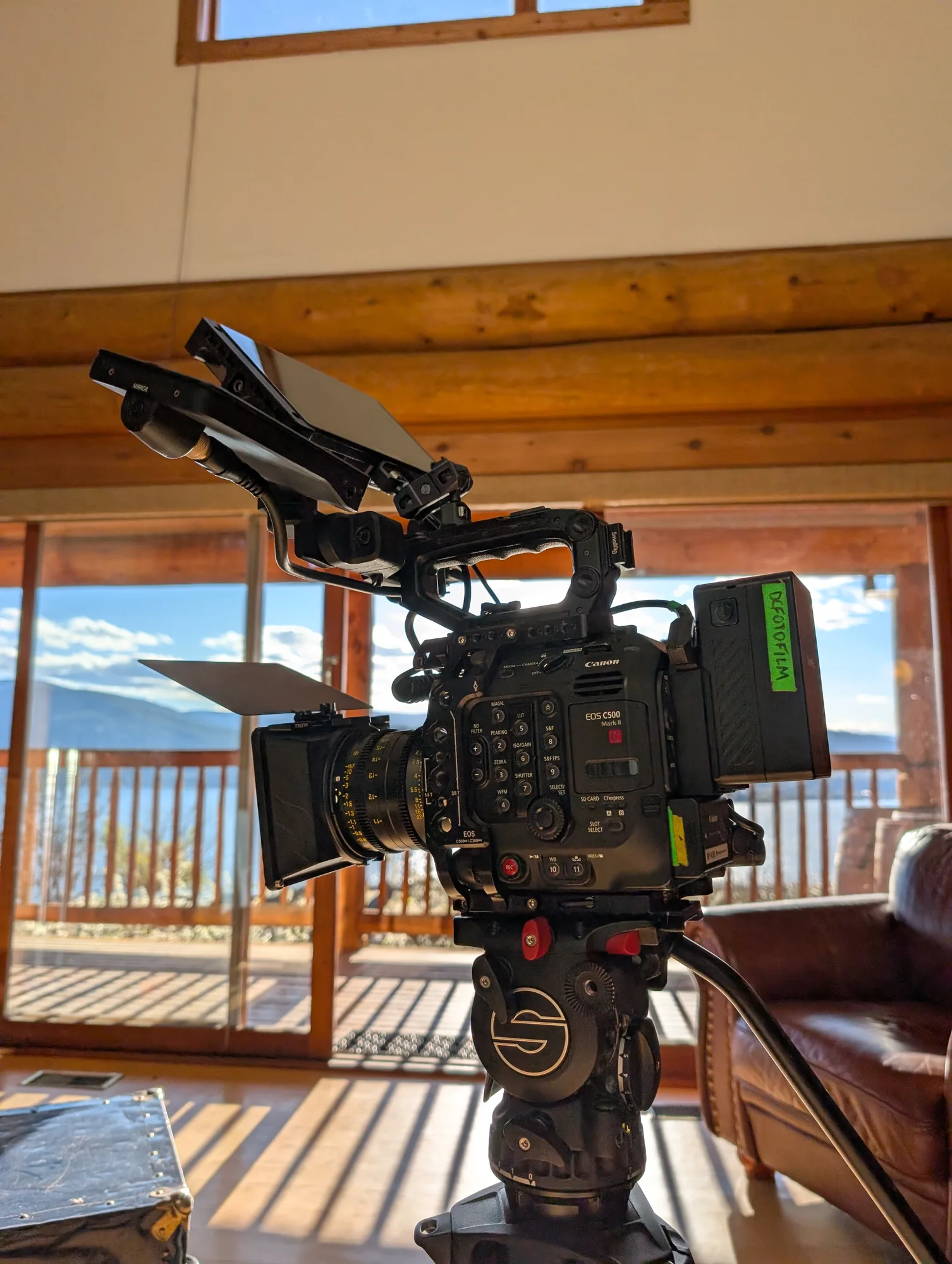
I shot it on my Canon C500 Mark II with DZO Vespid primes, which handle backlight and flare beautifully, and flew a DJI Mavic 4 Pro for the aerials over the cliffs and the lake.
GOLDEN HOUR AND DUSK IN THE VINEYARD
Golden Hour, Backlit
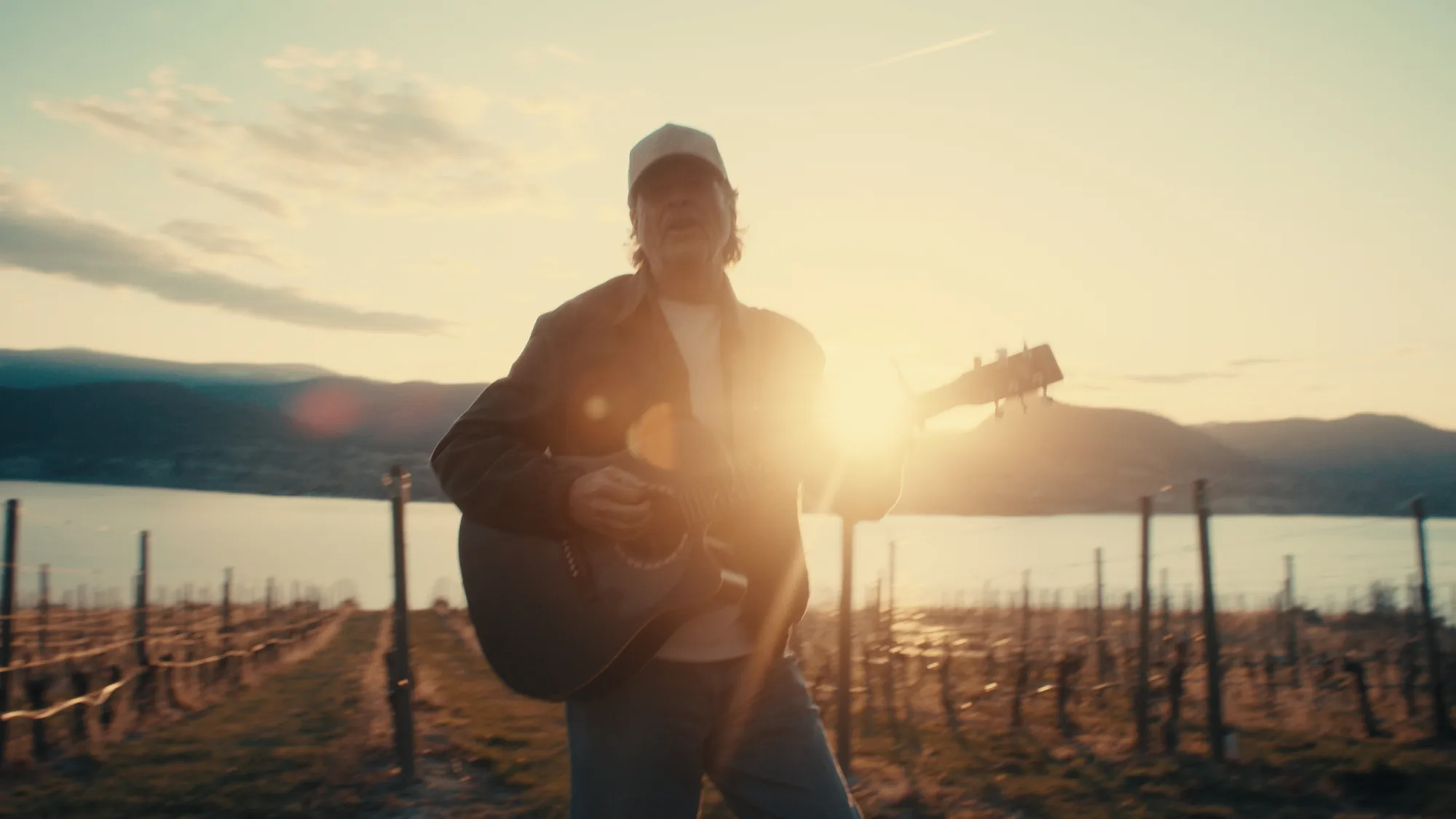
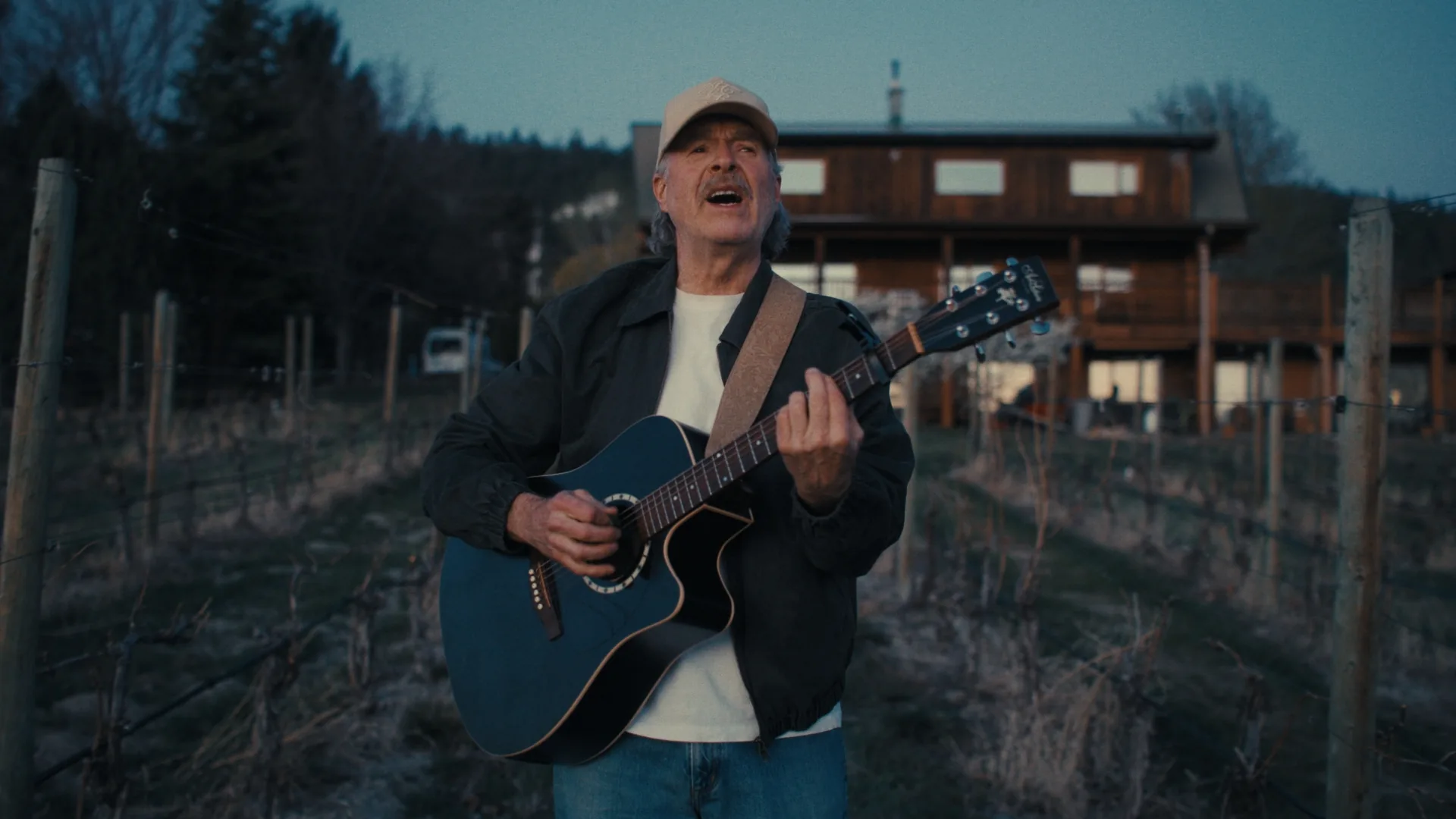
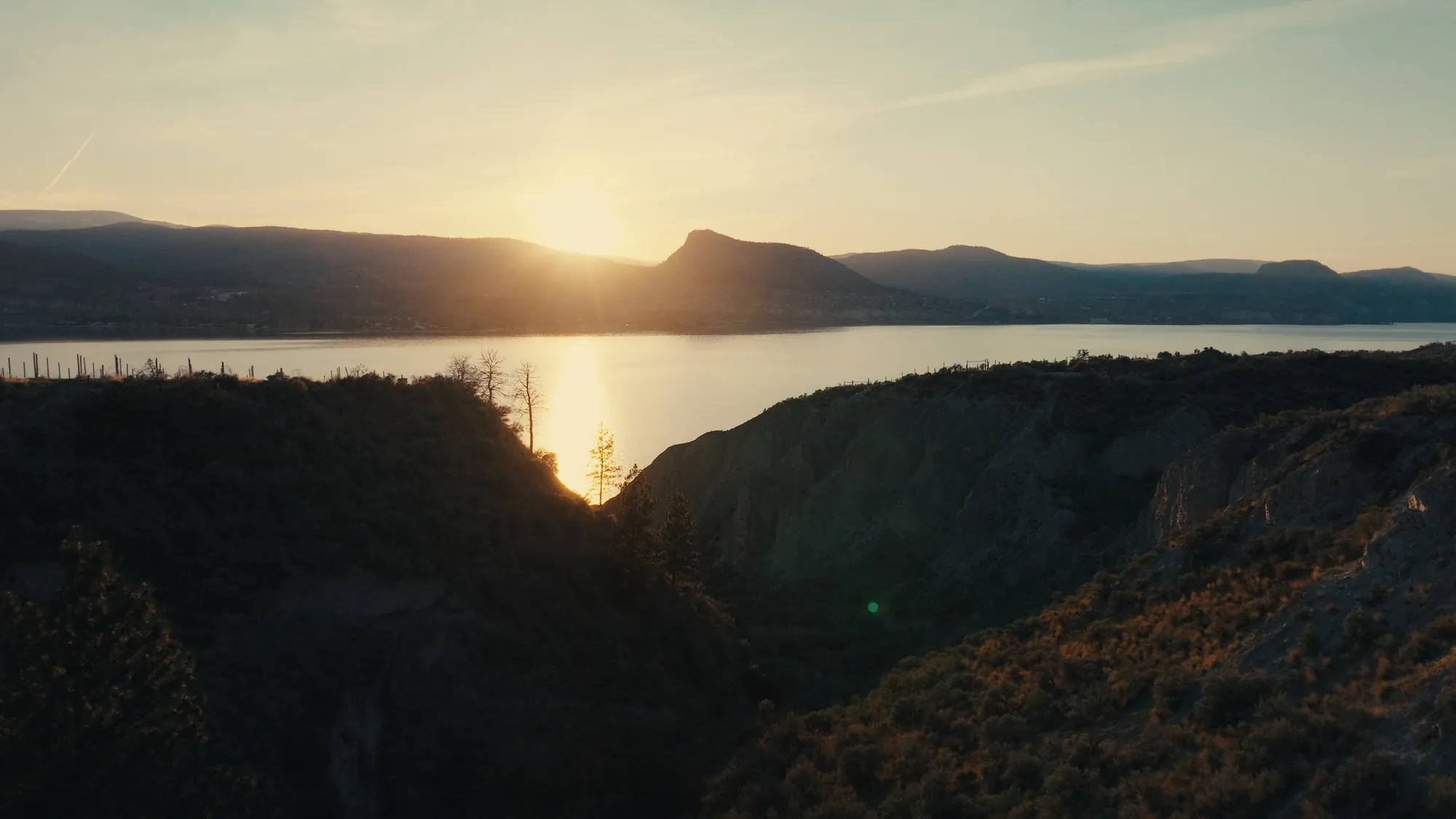
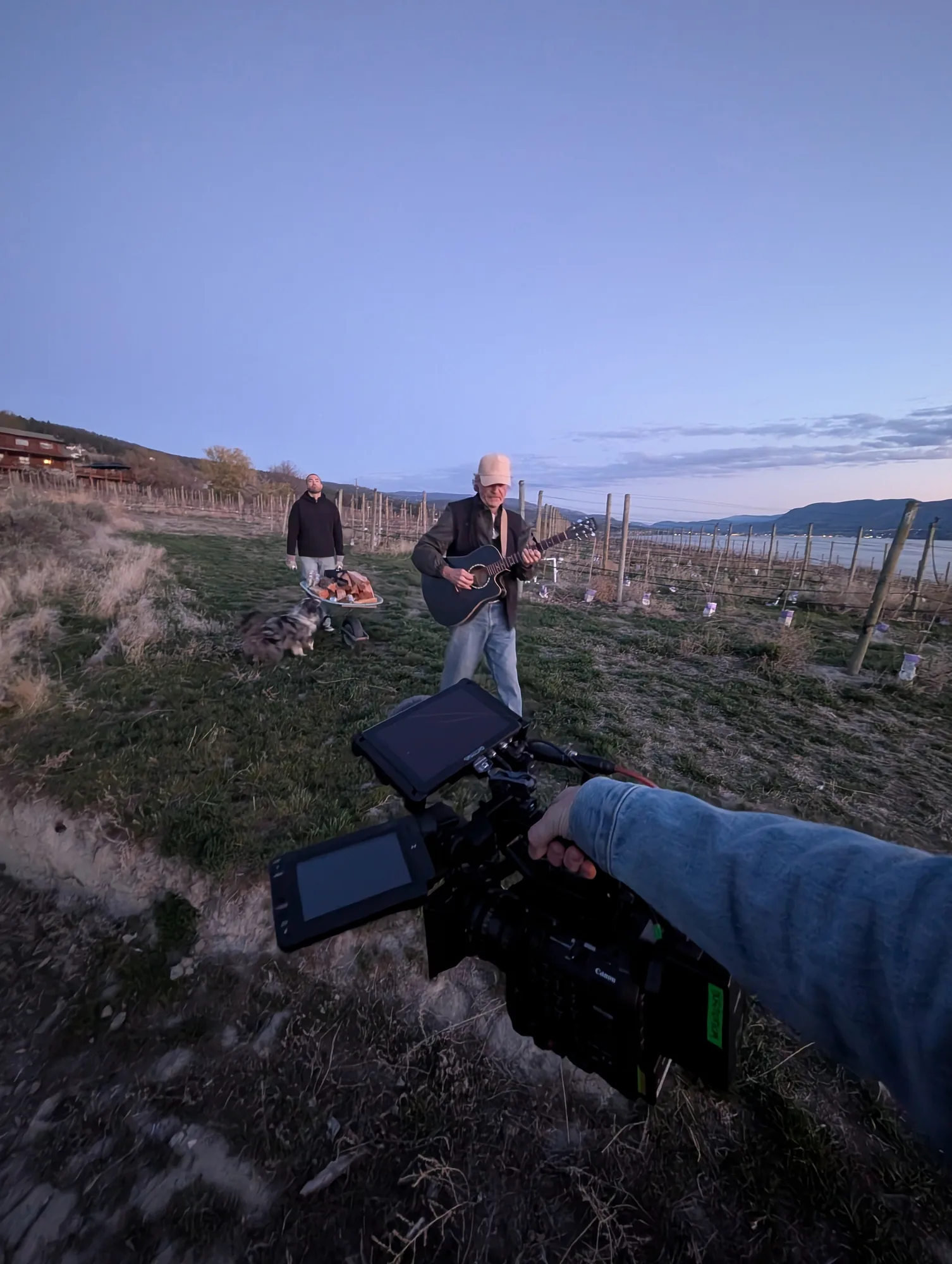
My favourite way to shoot a performer at golden hour is with the sun right behind them. It rims the hair and shoulders, throws flare across the lens and separates the artist from the background without a single light. The vineyard rows running down to the lake gave every frame depth, and the low sun turned the whole hillside gold.
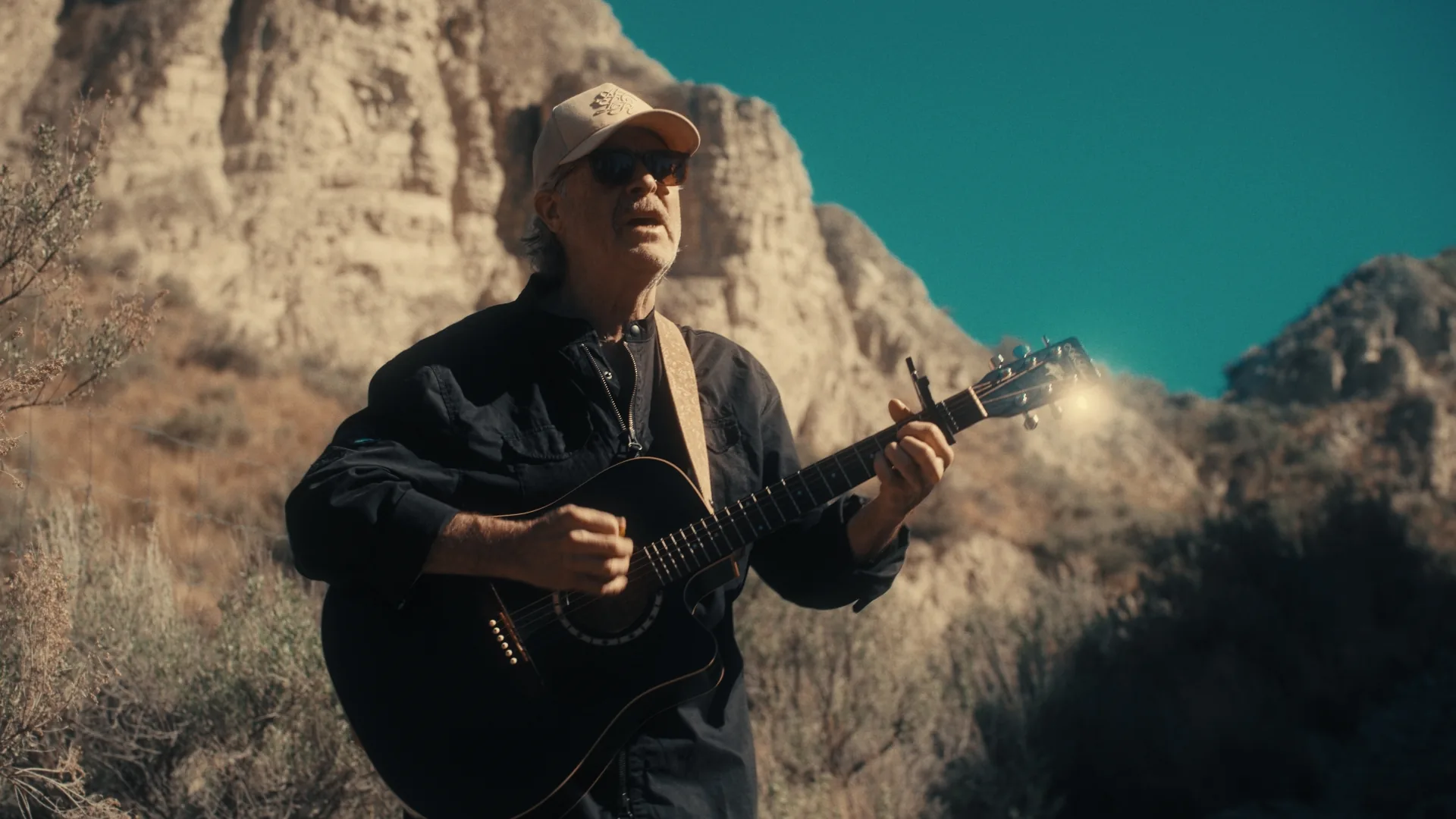
Further along the shore, the Naramata cliffs gave us a completely different texture: pale, eroded rock against a deep sky, with Giant's Head sitting across the water as the sun went down.
Fire: The Beach and the Wood Stove
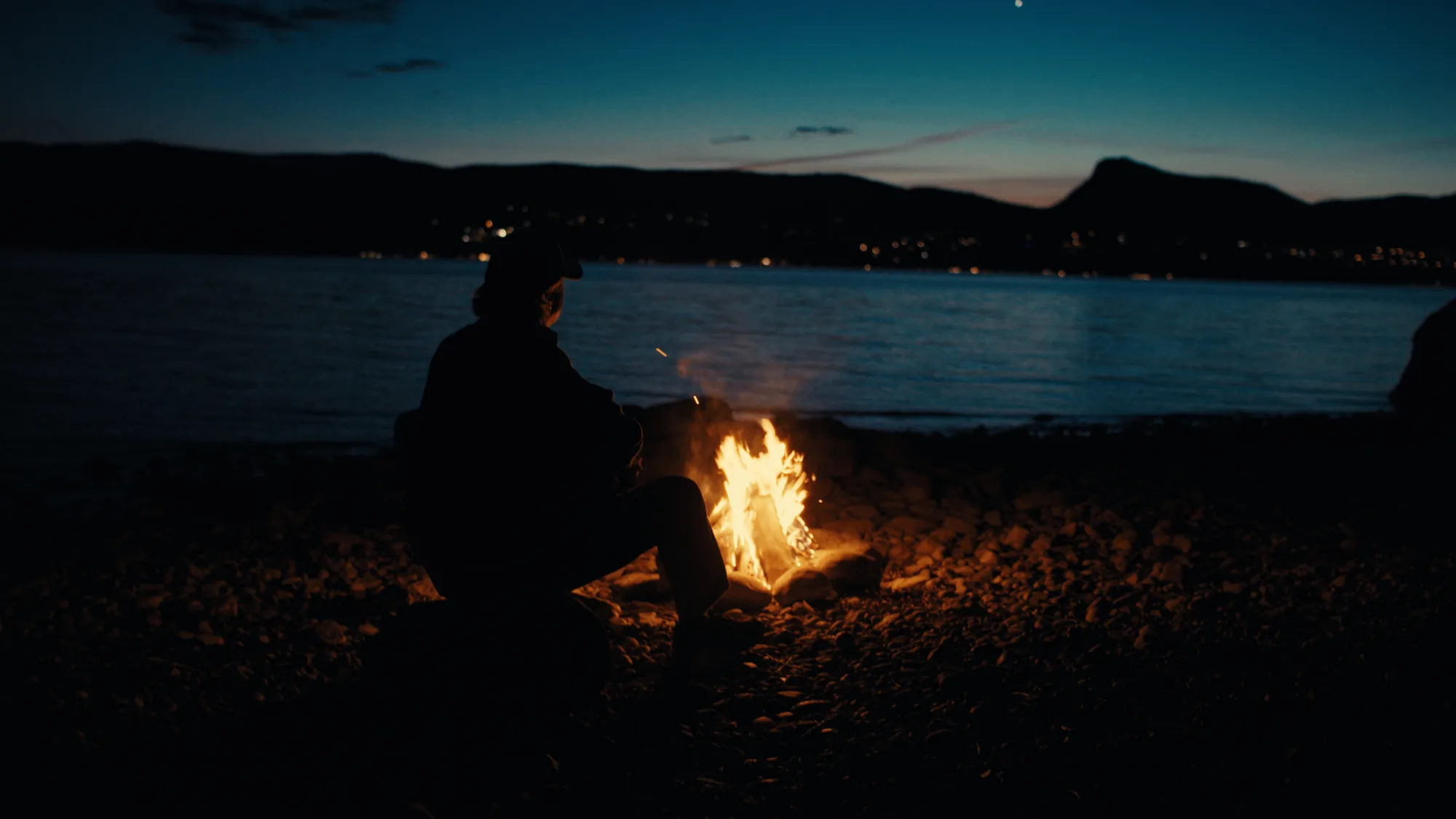
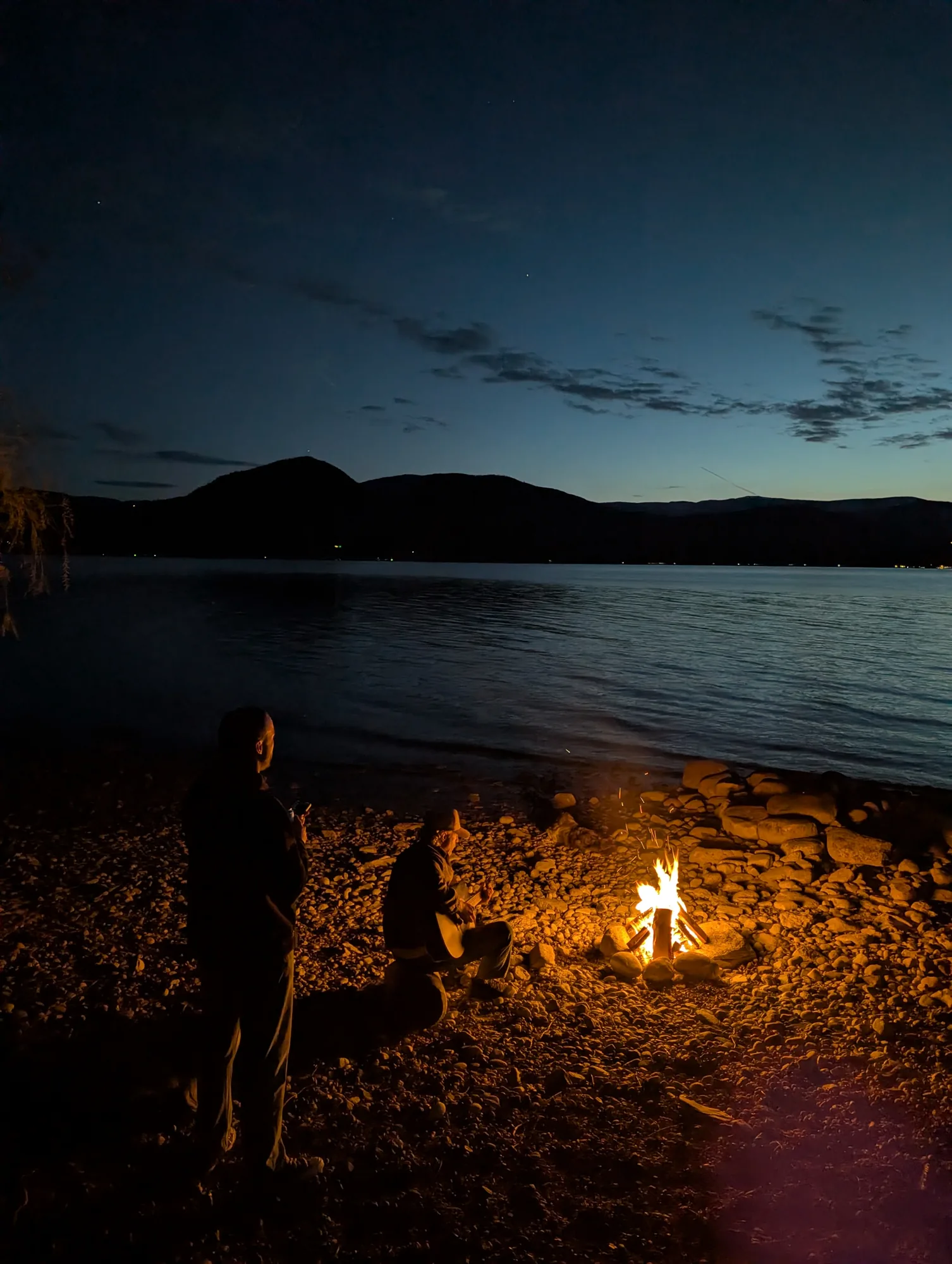
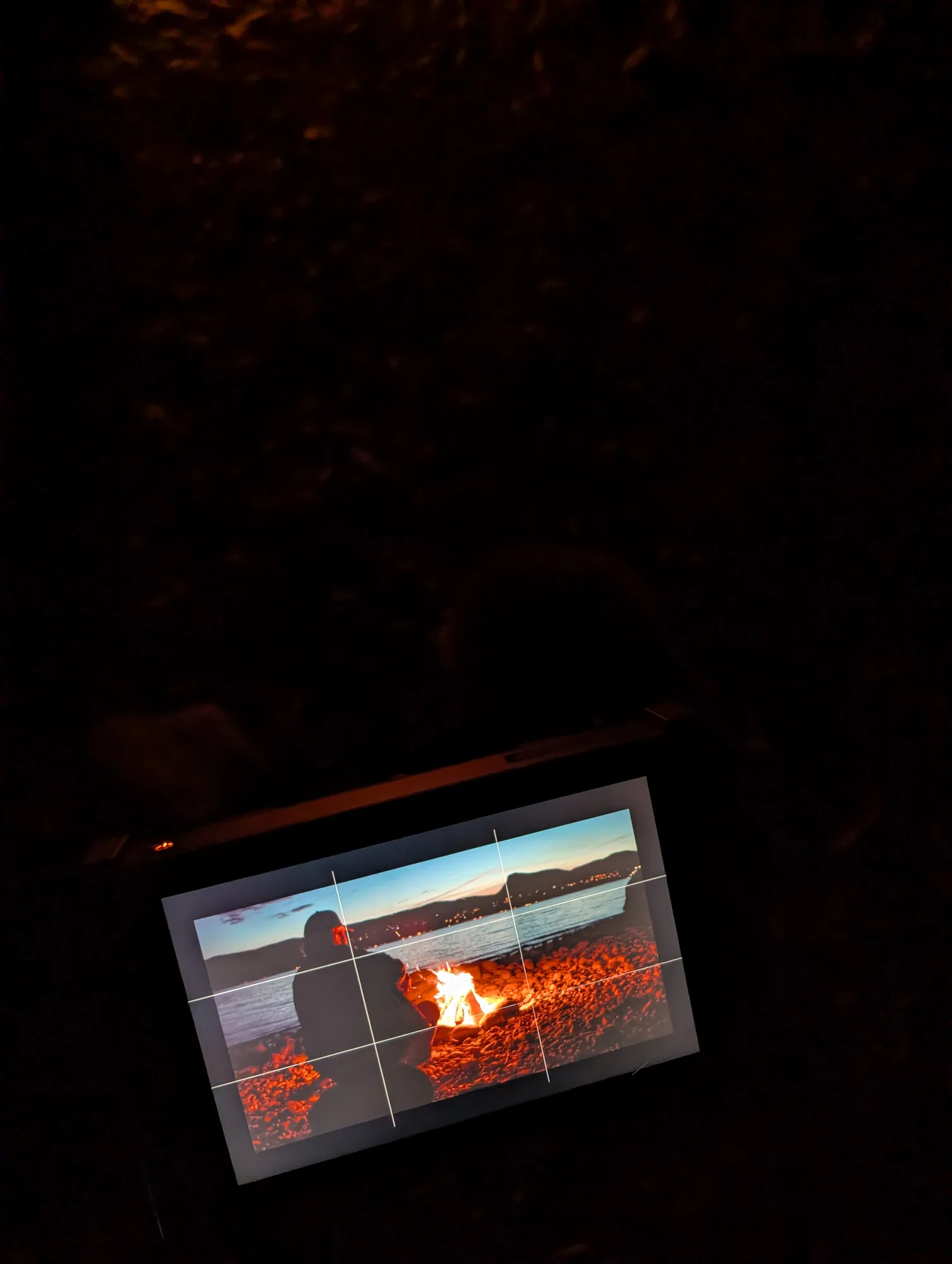
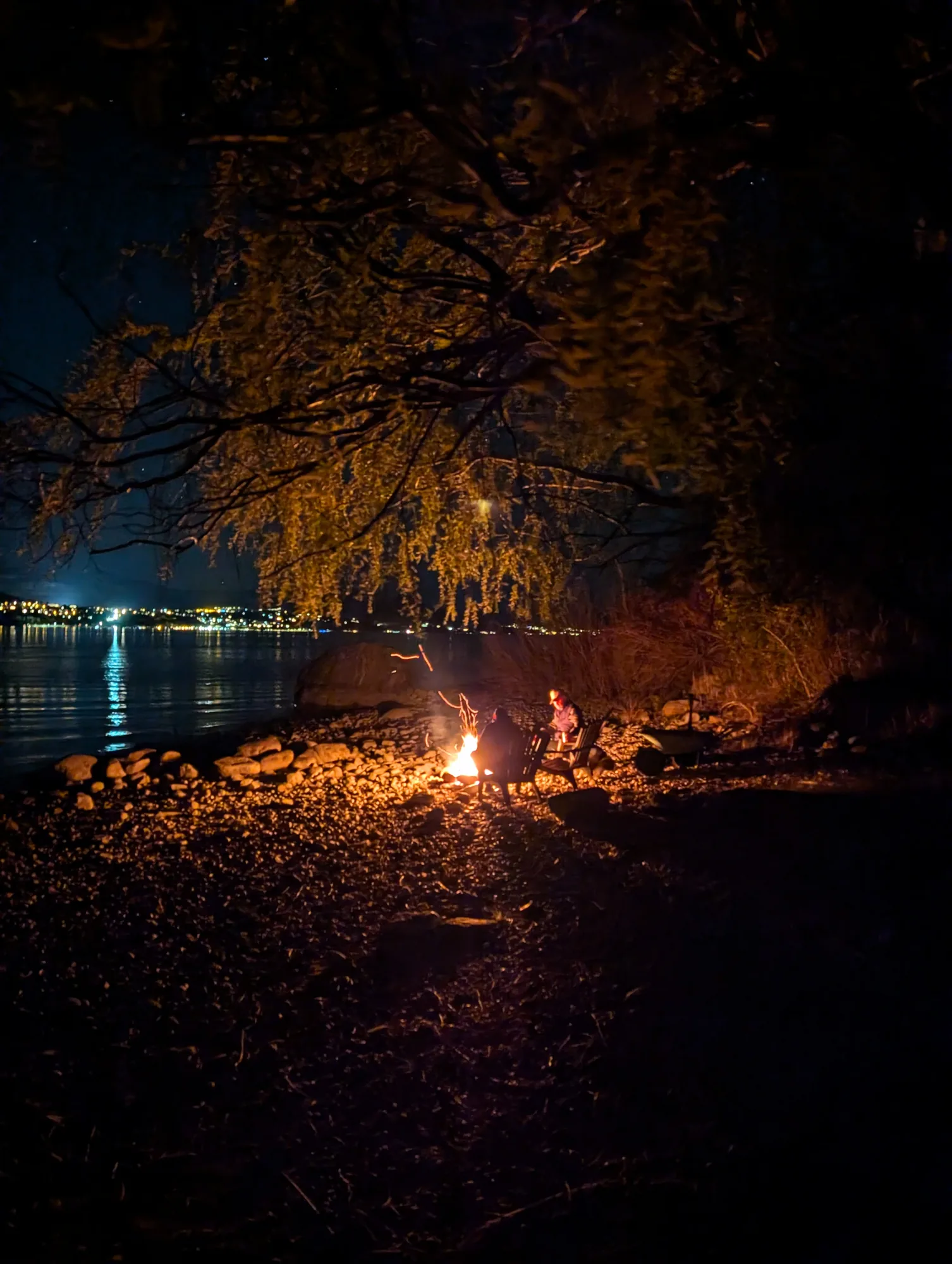
After the sun went down, fire took over. We built a fire on the beach under the cliffs, right at the edge of Okanagan Lake, and that became the opening image of the piece: a small warm flame against a huge cool landscape, with the lights of the far shore just coming on.
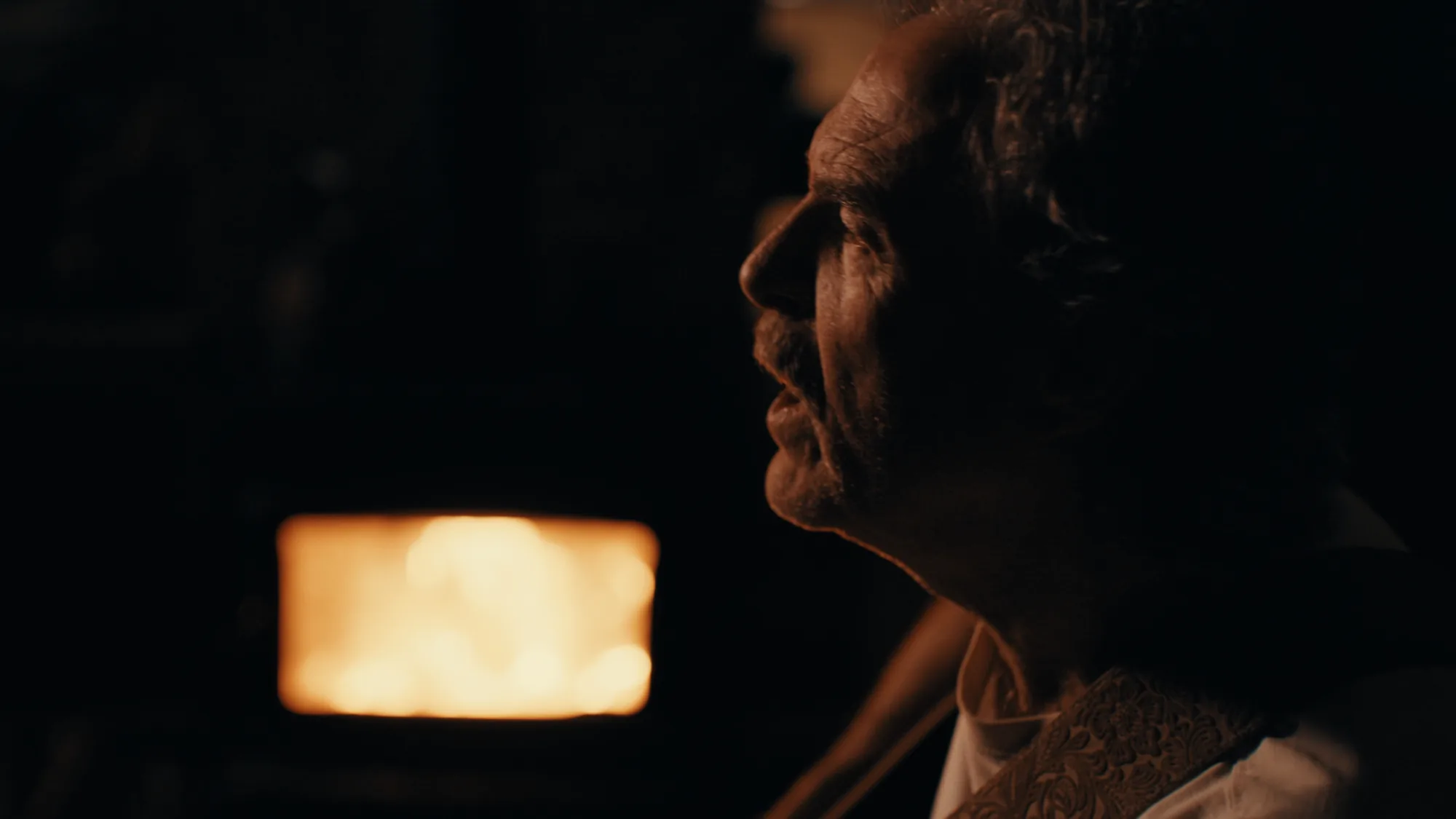
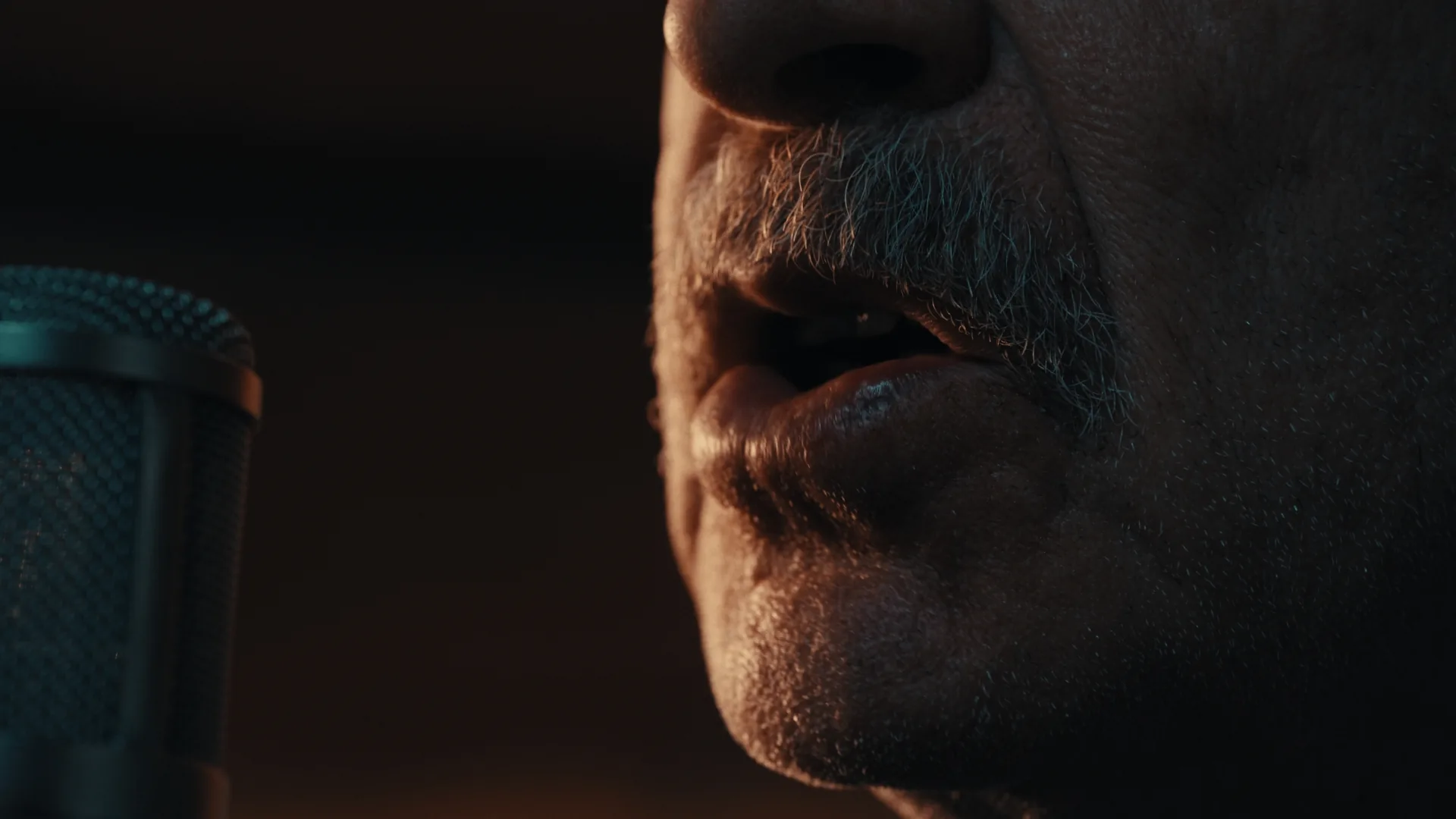
Inside, I shot close-ups lit only by a wood stove. Firelight is one of the most beautiful sources there is. It's warm, it moves, and it makes a face look lived-in. It also asks a lot of the camera, so I kept the exposure honest and let the shadows go dark rather than filling them in.
Blue Hour and Silhouettes
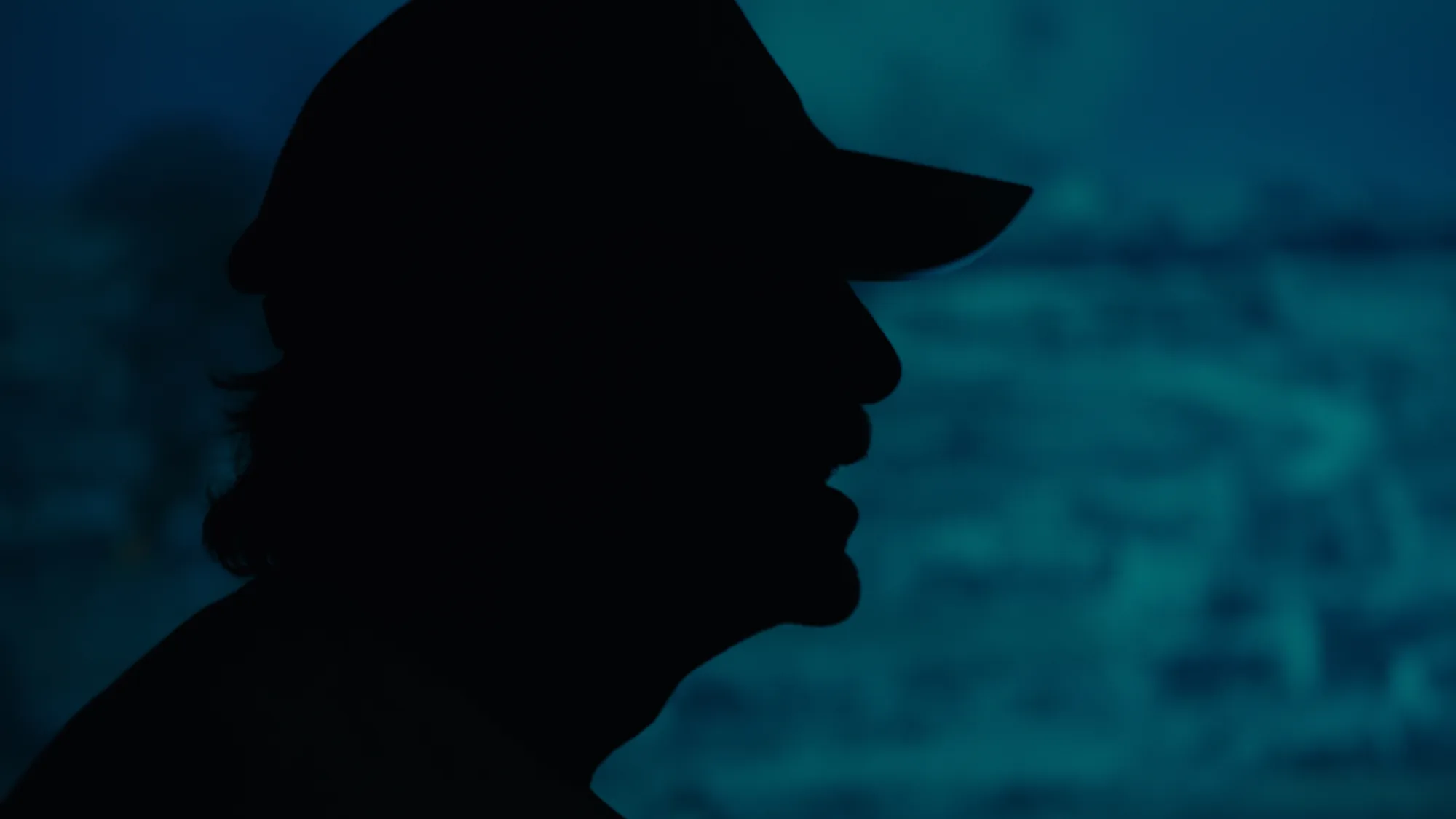
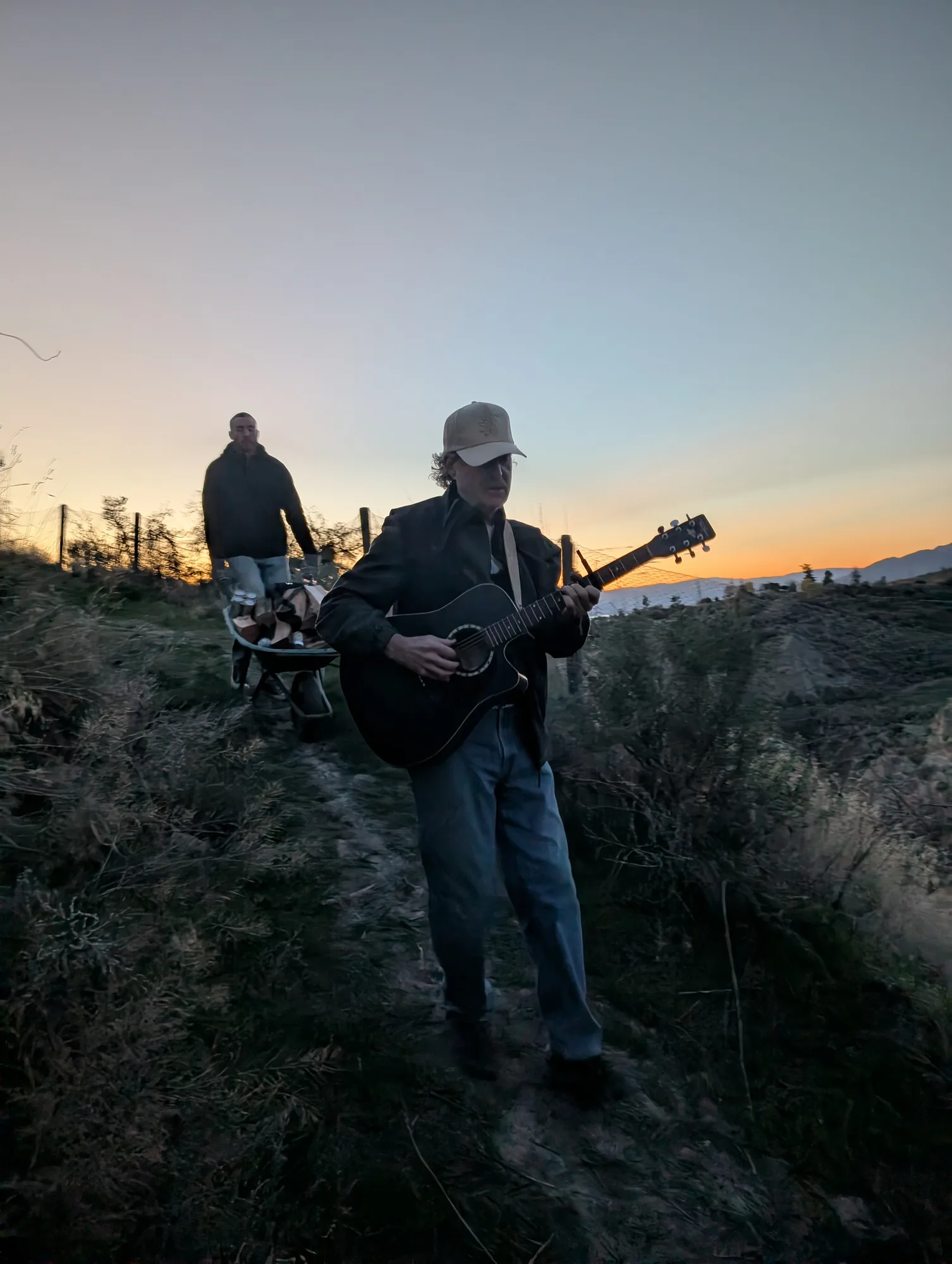
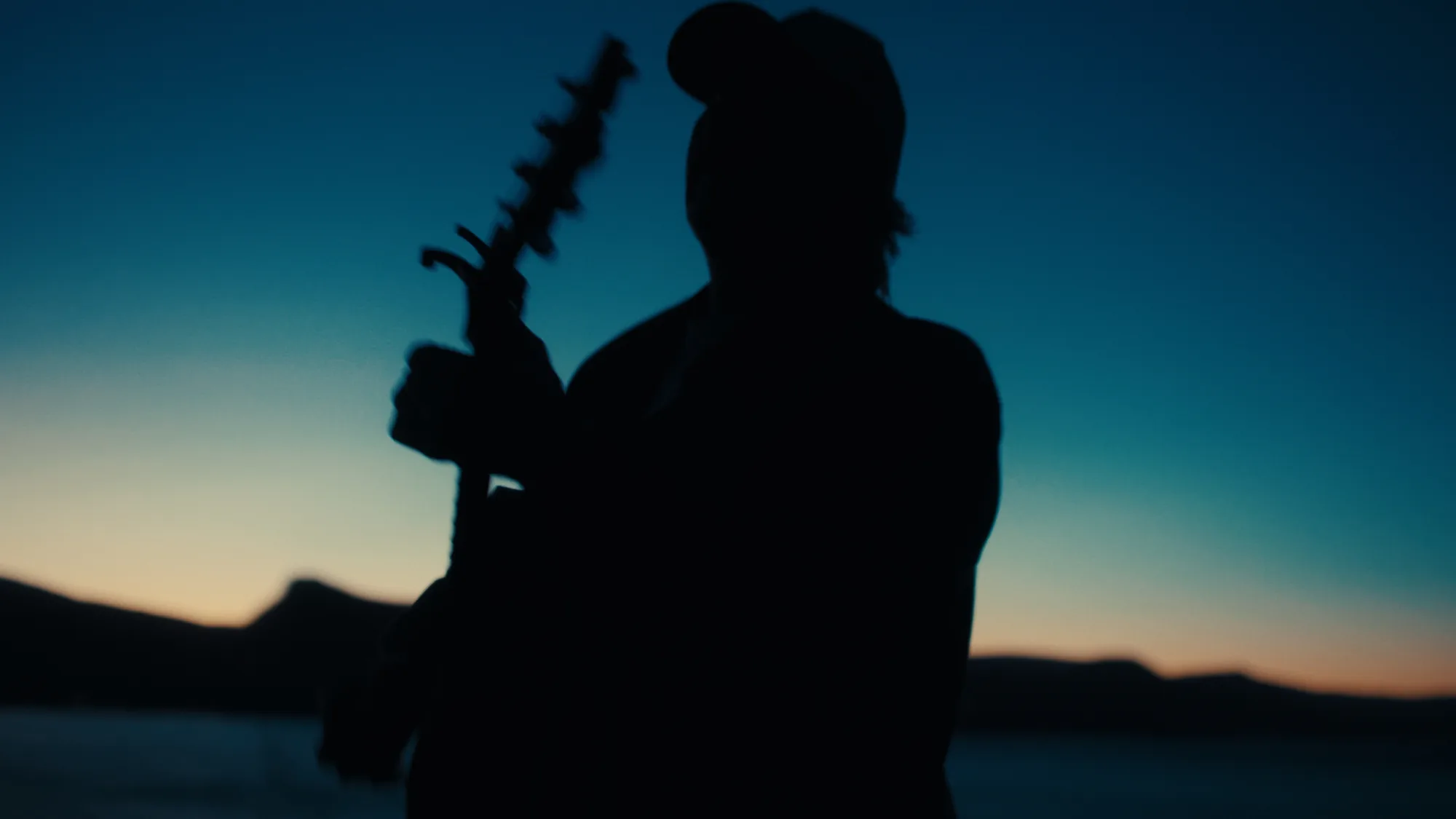
Blue hour was the other big goal. It's the twenty minutes or so after sunset when the sky goes deep blue and the horizon still holds a little orange. Put a performer against that and expose for the sky, and you get a full silhouette: just the shape of a man, a hat and a guitar neck. I graded those scenes toward teal, which pushed the cold of the sky against the warm of the fire scenes.
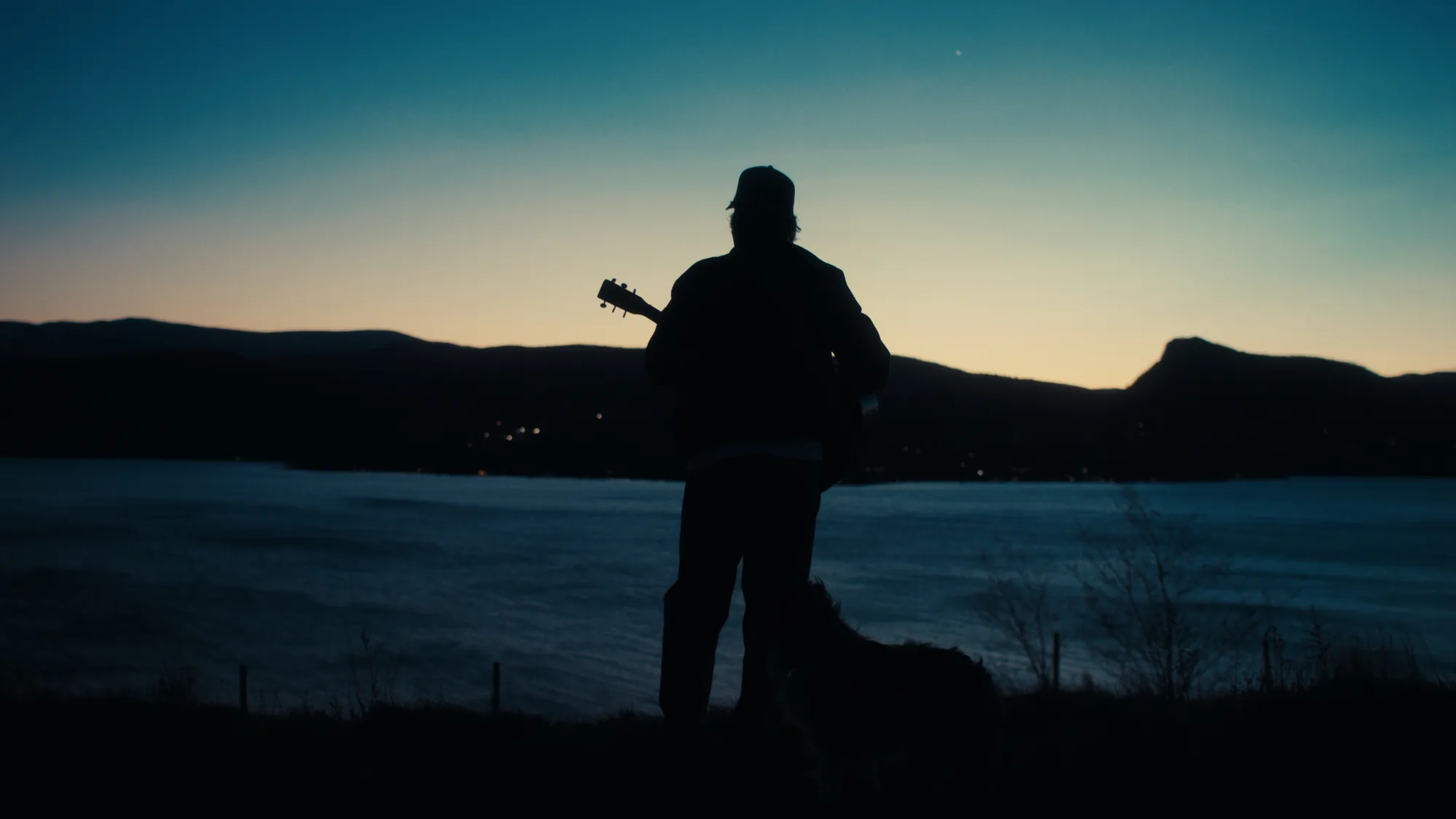
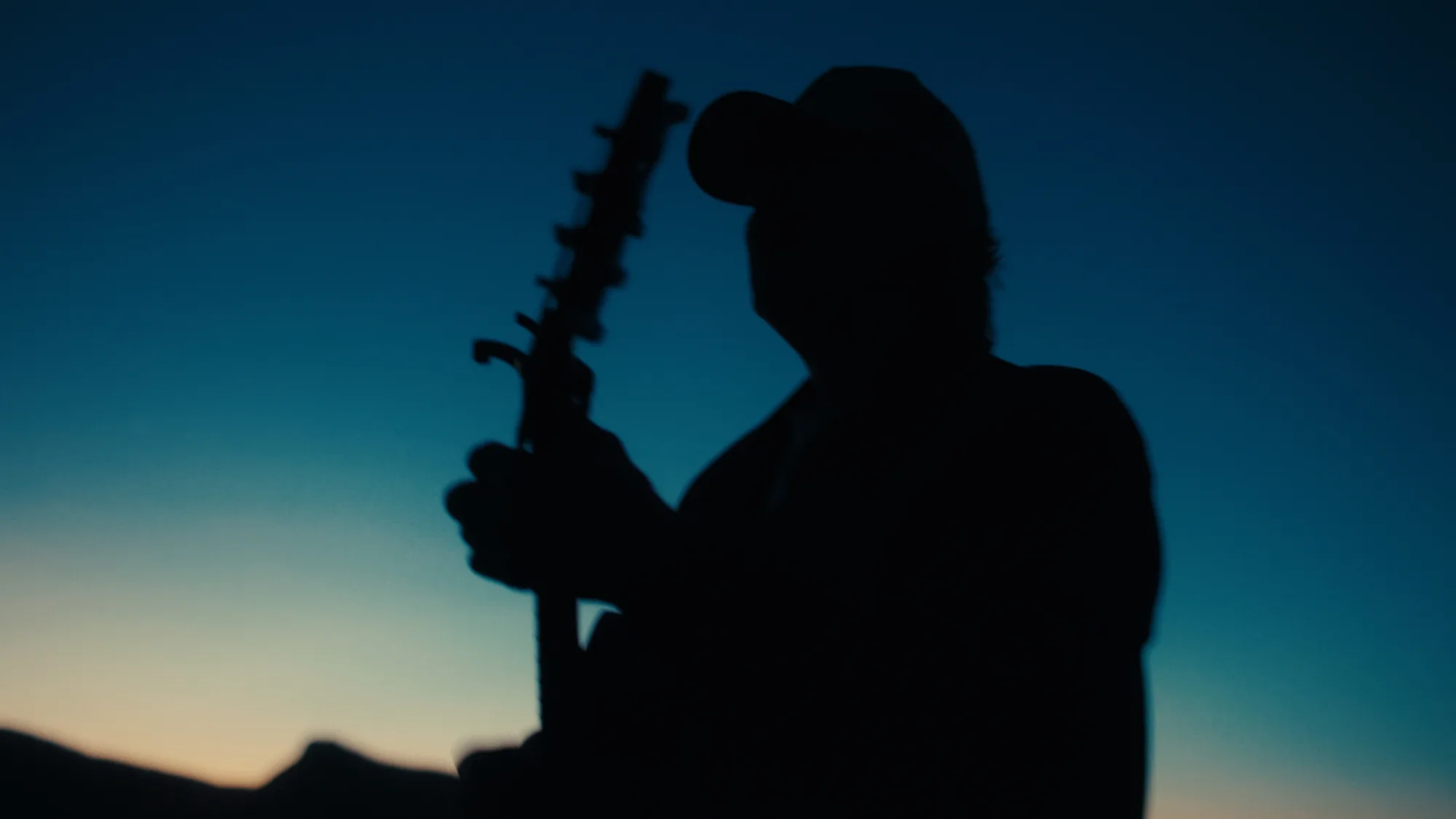
BLUE HOUR ON THE LAKESHORE · TEAL GRADE
The Projector Wall
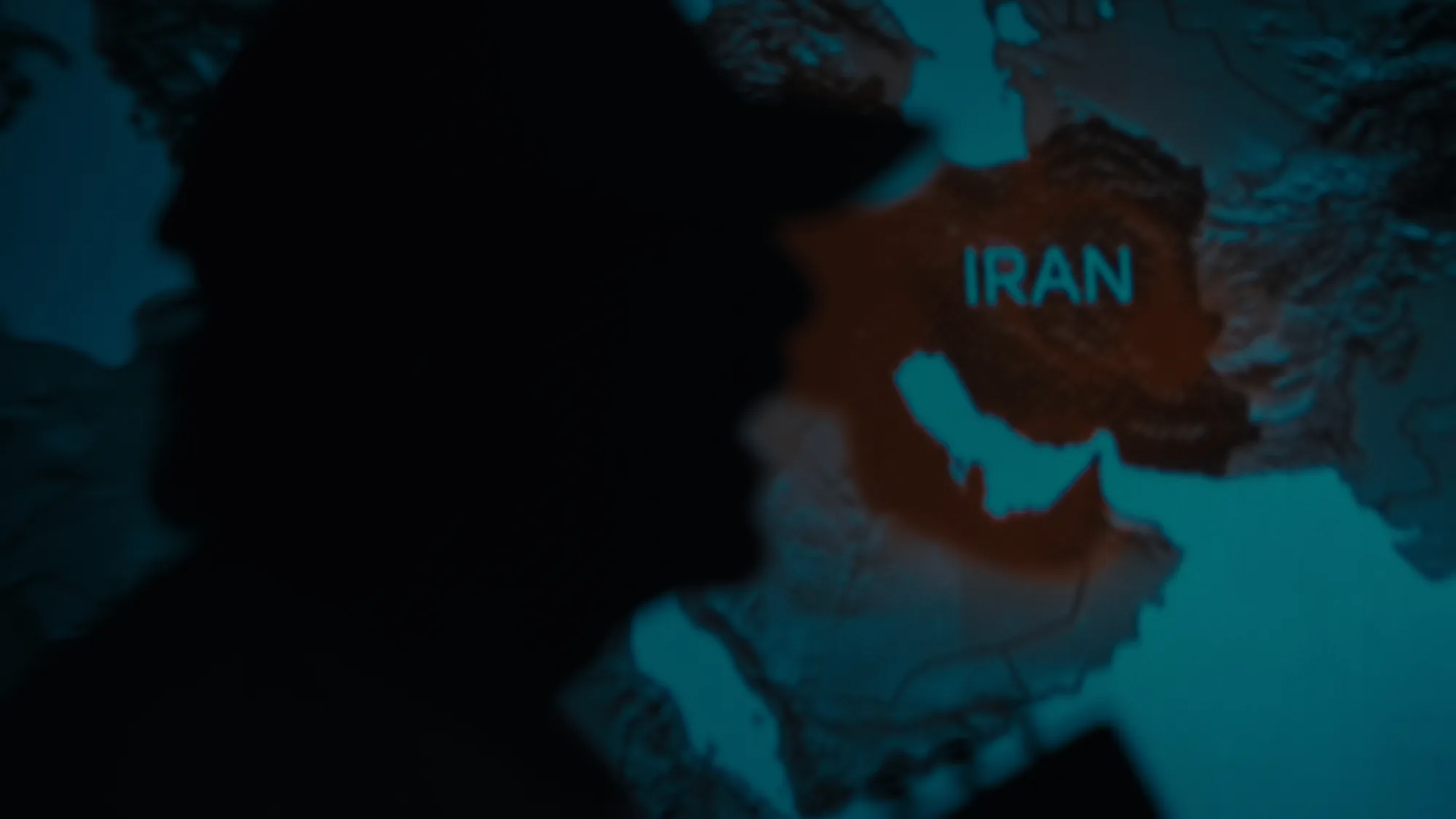
Because the song is about war, I wanted the world outside to push into the frame. We set up a projector and threw news imagery onto the back wall behind Paul: maps, conflict zones, the headlines of the moment. With the projector as the only light, Paul became a silhouette in front of it, so the images read around him and through him rather than as a cutaway. It's a cheap trick in the best sense: one projector, one wall, and the room is full of the news.
PROJECTED NEWS IMAGERY AS THE ONLY LIGHT SOURCE
The Eye
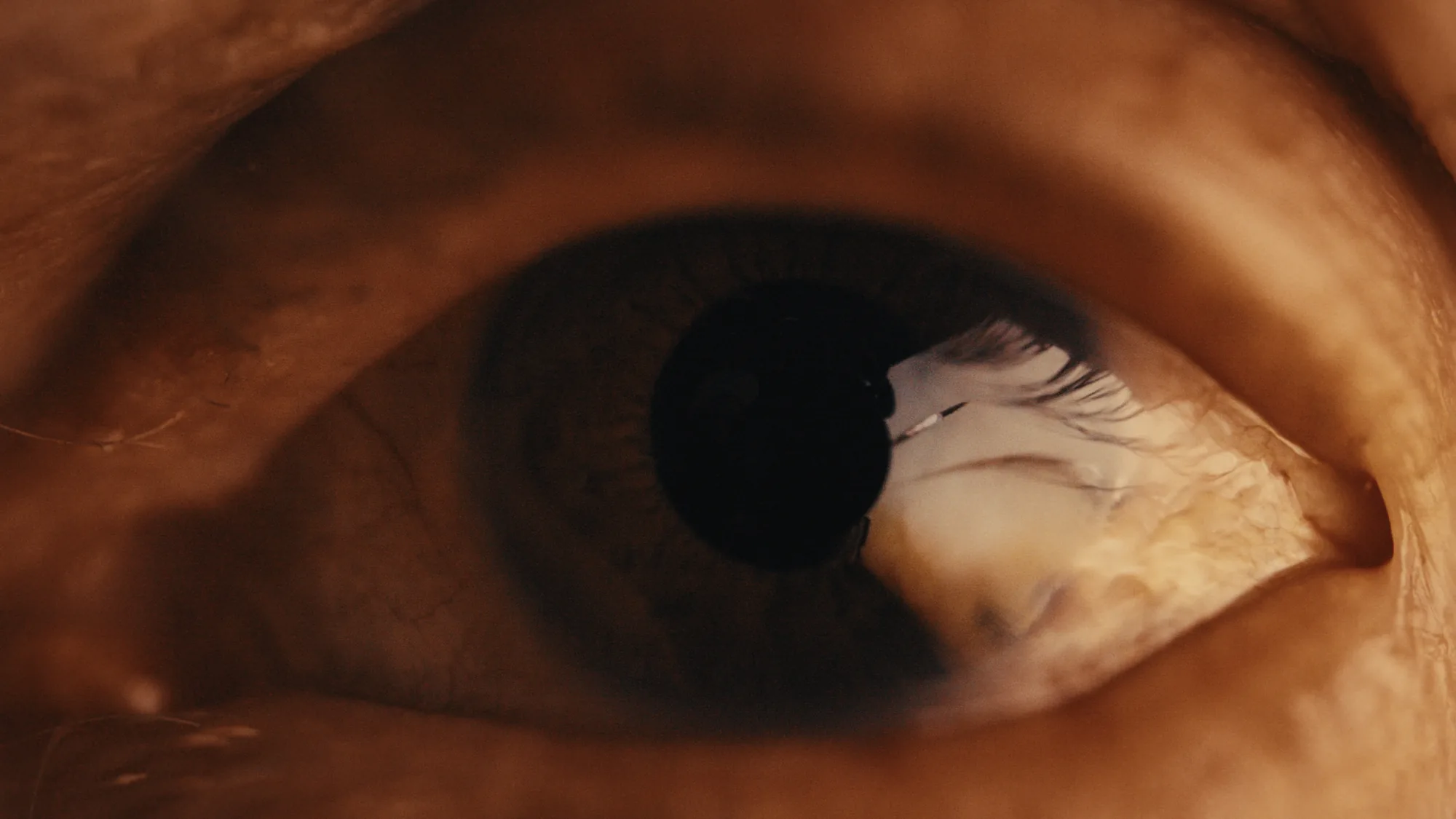
One shot carries the whole idea of the song. It's an extreme close-up of Paul's eye, and in the reflection, a missile. It's quiet and it's huge at the same time: one person, watching, and the weapon right there in front of him. Symbolic shots like this are where music videos get to be more than a performance, and it's the frame I come back to most.
It's done in camera. The missile footage played on a TV in front of Paul, and I shot the reflection in his eye as an extreme close-up. The only TV we had was the one in the house we were staying in, and I'd have loved a bigger screen to fill more of the eye, but the idea still lands.
Cutting It: A Seven-Angle Multicam
The edit was where this project really surprised me. Every performance pass, at every location, was synced to the song and stacked into one multicam sequence. By the end I had six or seven angles running at once, from the vineyard and the cliffs to the beach fire, the wood stove and the projector wall.
Cutting a multicam is closer to cutting a live concert than a short film. You play the song from the top and switch angles as it runs, feeling where the energy wants to go. Then you go back and refine. It made it easy to find the best version of every line and to move between warm and cold, day and night, in a way that follows the song instead of the shoot schedule. I don't get to work this way often, and I loved it.
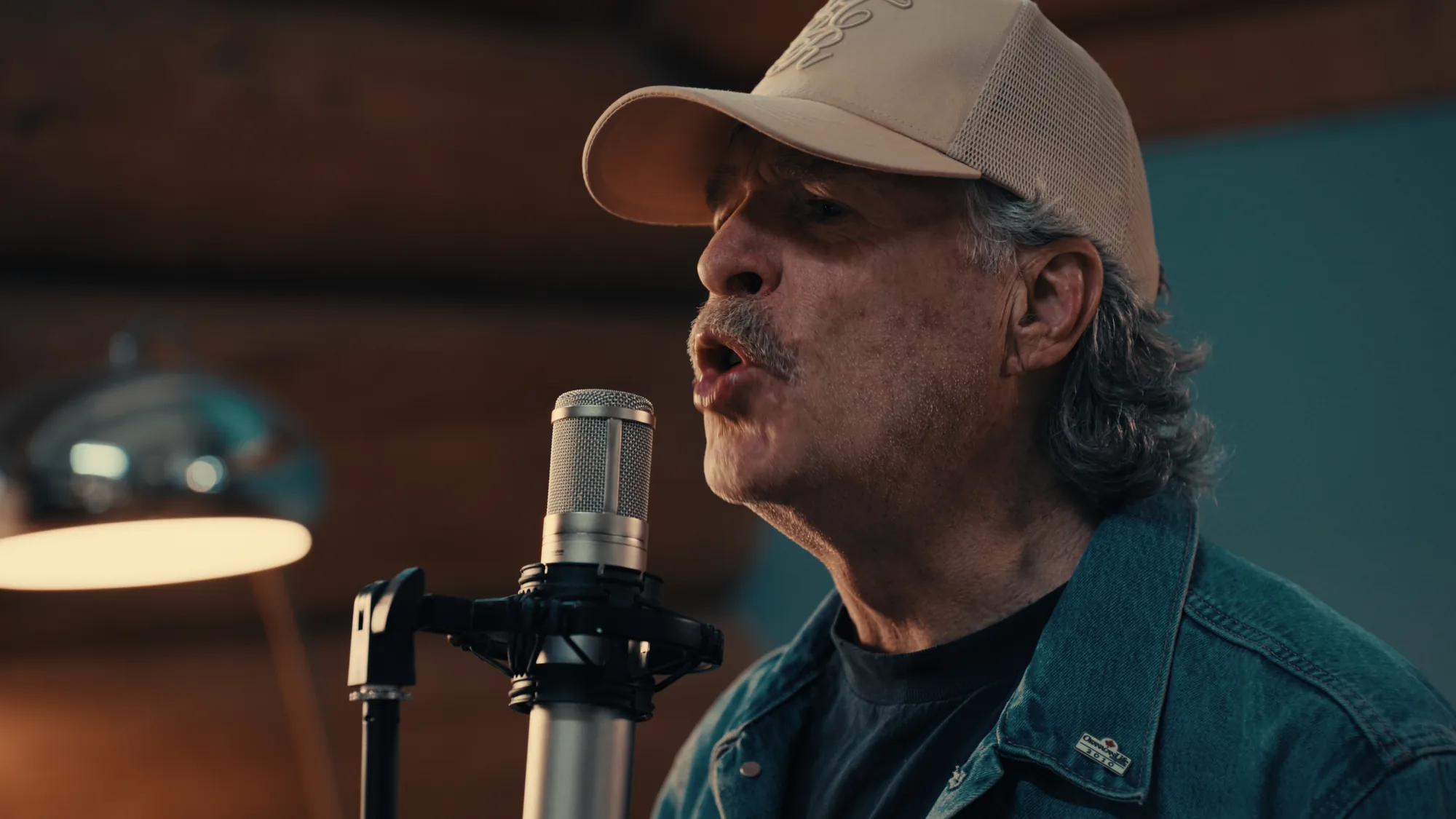
BEHIND THE SCENES
On Set in Naramata
Why It Worked
A small music video doesn't need a big lighting truck. It needs a strong idea, a performer who commits, and a plan built around the best light you can get. Naramata gave us the locations, the sky did most of the lighting, and the multicam edit let the song decide the cut. If you're an artist with a song that needs pictures, that's the kind of approach I like to bring.
FRAMES
From the Music Video
← Drag to scroll →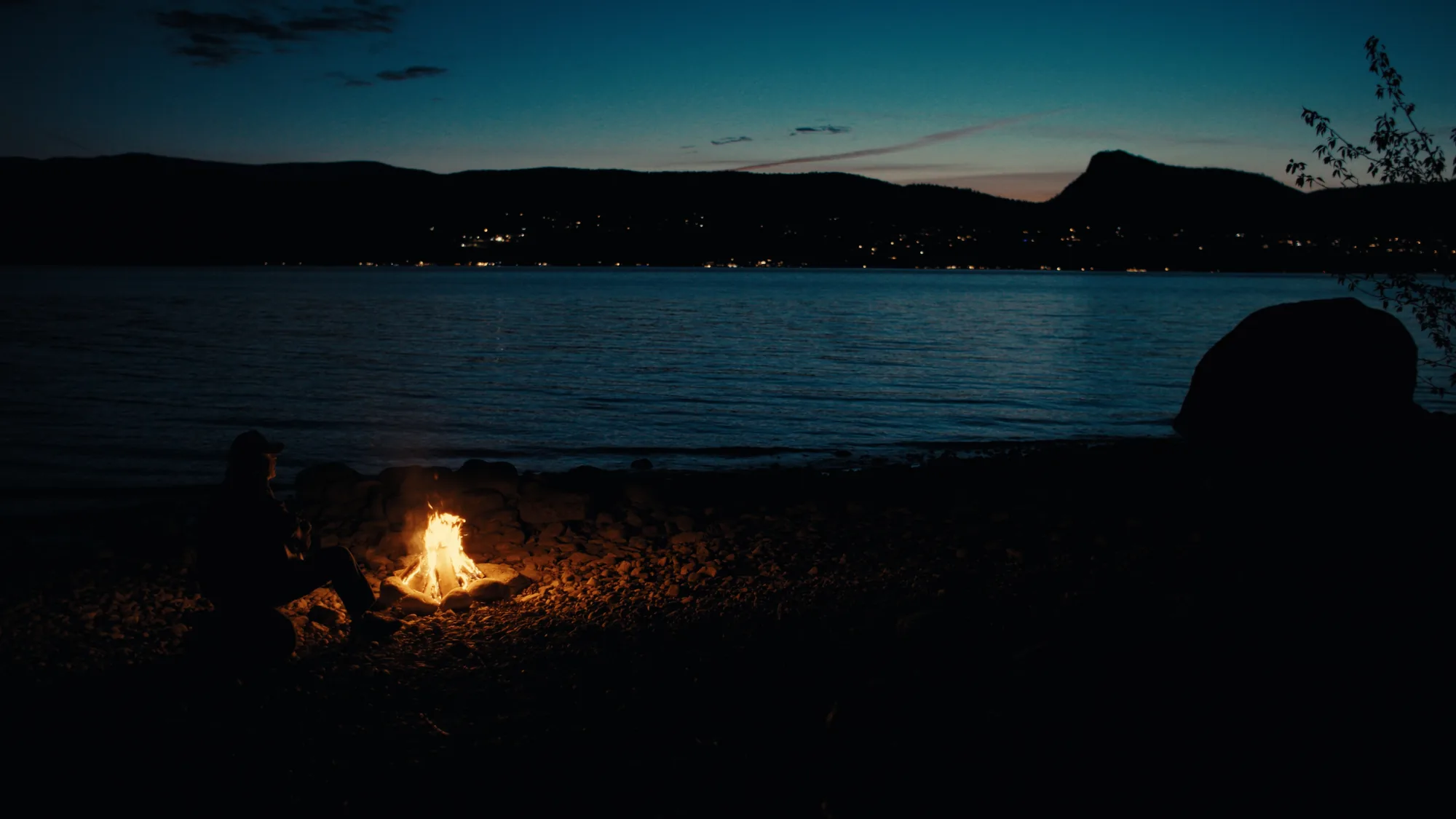
Music Video FAQ
Do you shoot music videos?
Yes. Music videos aren't the bulk of my work, but I love them, and they draw on everything I do in commercial and documentary cinematography: light, location and performance. I'm based in Calgary and shoot across Alberta and BC, including the Rockies and the Okanagan. More on hiring a DP →
Can you shoot a music video with natural light?
Absolutely, and it's often the best-looking option for acoustic and singer-songwriter music. Plan the performance around golden hour and blue hour, put the sun behind the artist for backlight and flare, and use practical sources like firelight for the night scenes. Take My Hand was shot almost entirely that way.
What camera did you shoot the music video on?
A Canon C500 Mark II with DZO Vespid cinema primes, plus a DJI Mavic 4 Pro for the aerials. It's my own package, so it comes with me on every shoot. See the gear →
What is a multicam edit for a music video?
Every performance take is synced to the song, then stacked as angles in one multicam sequence. In the edit you play the track and switch between angles as it runs, like cutting a live concert. On this video I cut between six or seven angles at once, which made it fast to find the best moment for every line.
How long does it take to shoot a music video?
It depends on the concept, but a performance-driven music video with a few locations can often be shot in one to three days. Take My Hand was shot over a couple of days, built around the sunset and blue hour windows. For budgets, see how much video production costs in Calgary.